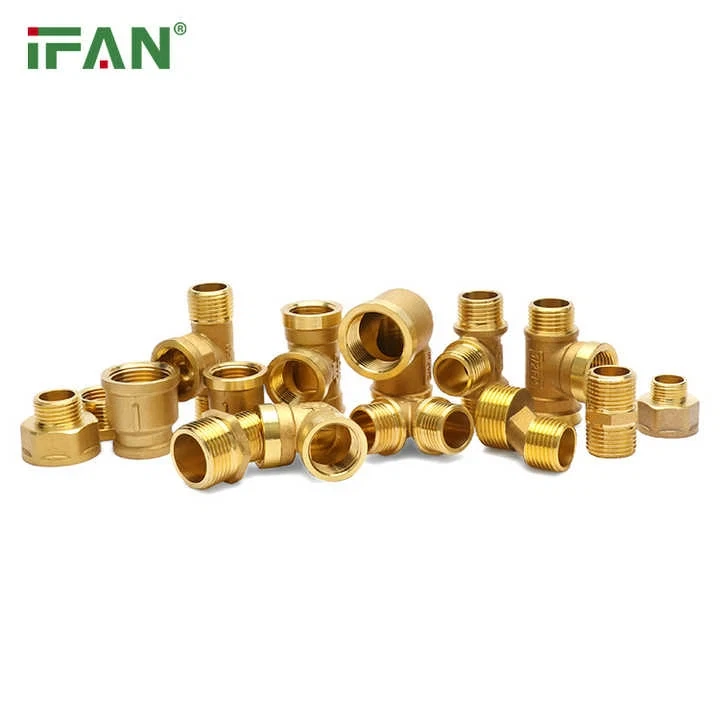


Purity Control of Brass Fittings in Semiconductor Specialty Gas Systems
Introduction to Semiconductor Specialty Gas Systems
Semiconductor manufacturing processes demand ultra-clean, highly controlled environments.
Specialty gas delivery systems play a critical role in etching, deposition, doping, and cleaning steps.
Gases like silane, ammonia, hydrogen chloride, and nitrogen trifluoride require high-purity transport paths.
Brass fittings, though not always the first choice, are sometimes applied in secondary lines or support systems.
Maintaining chemical purity and structural integrity of brass fittings is vital to avoid contamination.
Importance of Material Purity in Semiconductor Applications
Semiconductors are extremely sensitive to molecular-level impurities.
Even parts-per-billion (ppb) contamination from piping or fittings can lead to yield loss or device failure.
Outgassing, corrosion, or surface reactions in gas lines must be tightly controlled.
This makes material selection and purity management central to gas system design.
Brass, with proper finishing and quality control, can meet these standards in non-critical gas lines.
Brass Material Composition and Concerns
Standard brass is an alloy of copper and zinc, sometimes containing lead or tin.
Impurities like sulfur, phosphorus, or residual oils can compromise purity levels.
High-lead brass is strictly avoided in cleanroom or semiconductor applications.
Only low-lead, dezincification-resistant (DZR) brass should be considered for such environments.
Manufacturers must provide material certificates confirming compliance with SEMI, ASTM, or RoHS standards.

Surface Finish and Electropolishing Requirements
The internal surface finish of brass fittings greatly influences gas system cleanliness.
Rough or porous surfaces trap moisture, hydrocarbons, and particulates, causing long-term contamination.
To counter this, fittings are often electropolished to achieve a smooth, passivated inner surface.
Target surface roughness (Ra) is typically less than 0.2 µm for gas distribution lines.
Post-polishing, fittings undergo cleaning in ultrapure solvents followed by vacuum drying and nitrogen purging.
Particle Control and Cleanroom Packaging
Brass fittings for semiconductor gas systems must meet stringent particle count specifications.
Any loose particles or metal flakes can be disastrous for gas-sensitive wafers.
To address this, fittings undergo high-purity ultrasonic cleaning using DI water and Class 100 cleanroom standards.
Once cleaned, fittings are double-bagged in cleanroom-grade packaging to prevent recontamination.
Labels often include lot traceability, cleaning batch info, and moisture control indicators.
Passivation and Coatings for Chemical Stability
Because brass is more reactive than stainless steel, surface passivation is crucial.
Passivation methods include controlled oxidation, chrome-free coatings, or nickel plating.
Nickel or electroless nickel coatings serve as a barrier layer to prevent zinc leaching or oxidation.
This coating also enhances chemical compatibility with gases such as HF or ClF₃.
Regular coating thickness checks and adhesion testing ensure durability in pressurized systems.

Inspection, Certification, and Traceability
High-purity brass fittings must pass multi-level inspection before integration into gas lines.
Testing includes:
Helium leak testing (typically <1x10⁻⁹ atm-cc/sec)
Residual gas analysis (RGA)
Microbalance particle shedding tests
XRF or ICP-MS for material verification
Each fitting should be fully traceable by lot number, with associated certificates of conformance (CoC).
Some facilities require Third-Party Audits or ISO 14644 certification documentation.
Application Boundaries and Alternatives
While brass can meet purity criteria, its use is limited to non-critical paths in semiconductor fabs.
For ultra-high purity (UHP) gas lines, 316L stainless steel with VCR or orbital welds is preferred.
Brass fittings may be applied in exhaust systems, purge lines, or process cooling water systems.
When selected correctly and treated appropriately, brass provides a cost-effective, stable solution.
Future advances in coating and cleaning technology may expand its utility in semiconductor applications.
Conclusion
Purity control in brass fittings for semiconductor specialty gas systems is both complex and essential.
From material selection to surface finishing and packaging, every step impacts gas quality.
While brass is not ideal for high-purity applications, advanced treatment and quality control can make it viable in select zones.
Through rigorous inspection, passivation, and certification, these fittings can safely support next-generation chip manufacturing environments.
Contact IFAN
Phone: +86 15088288323
Email: sales24-ifan@ifangroup.com