

Structural Composition and Mechanical Assembly
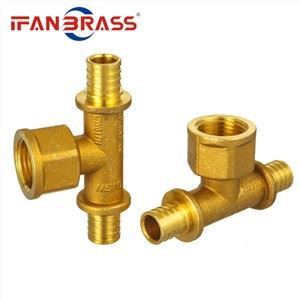
The IFAN BS 7291 PEX Slide Fittings feature a three-part structure: an inner brass or PPSU insert, elastomeric sealing rings, and an external sliding sleeve. This fitting type uses mechanical compression by sliding the sleeve over an expanded PEX pipe, which presses the pipe onto the insert and sealing rings. The internal geometry of the insert includes anti-pull ridges to increase axial retention. The outer sleeve is manufactured with smooth internal surfaces and flared edges to reduce friction during installation. All structural elements are dimensionally coordinated to ensure concentricity and maintain BS 7291 compliance.
Base Materials and Raw Material Standards
The metallic parts of the fitting are typically made of CW617N brass conforming to EN 12165, or dezincification-resistant brass (DZR) for enhanced durability in aggressive water conditions. Non-metallic components such as PPSU (polyphenylsulfone) are sourced from certified suppliers and molded under controlled thermal cycles. All materials used are compliant with WRAS and BS 6920 for use in drinking water systems. Each batch of incoming raw material is verified using spectrometry and resin purity tests. Manufacturing traceability begins at this stage, linking material lots to each production run.
Surface Finish and Coating Integrity
Brass inserts may be finished with nickel or chrome plating for enhanced corrosion resistance and surface stability. Coating thickness ranges from 8 µm to 15 µm and is verified using eddy current sensors. PPSU fittings, being inherently resistant to scaling and corrosion, undergo ultrasonic cleaning after molding to remove release agent residues. All surface-treated components undergo salt spray testing per ISO 9227 and water immersion tests to simulate field aging. Visual inspections and adhesion peel tests are also part of the final acceptance criteria for coated parts.

Elastomer Seals and Ring Groove Engineering
EPDM rubber O-rings are installed on machined grooves of the insert body. These O-rings are manufactured to meet BS EN 681-1 standards for elastomeric seals in cold and hot water. The groove design ensures compression without excessive deformation. Dimensional control of groove width and depth is achieved with CNC machining and measured via micrometer gauges. Lubricants applied during installation must be WRAS-approved to avoid seal degradation. Compression set, elongation, and tear resistance are tested per ASTM D395 and D412.
Sliding Sleeve Properties and Functional Testing
The sliding sleeve, usually fabricated from stainless steel or anodized aluminum, is critical for forming the mechanical lock. The sleeve's internal diameter is precisely matched to the pipe's expanded outer diameter with a tolerance of ±0.05 mm. The sleeve's exterior is smooth and corrosion-resistant. Functional testing includes insertion force testing and axial pull-out tests to verify holding strength. These are conducted using hydraulic presses and force sensors, with results recorded to confirm compliance with the mechanical retention parameters in BS 7291.
Dimensional Accuracy and Tolerance Control
The fittings are produced within strict dimensional tolerances, generally within ±0.05 mm on critical dimensions such as insert outer diameter, groove spacing, and sleeve diameter. Measuring tools used include calipers, laser micrometers, and 3D coordinate measuring machines (CMM). Conformity to BS 7291-2 Part 2 specifications ensures universal fit with compliant PEX pipe systems. Sample testing from every production batch includes full dimensional reports and mating trials with BS 7291-certified PEX tubing.
Hydrostatic Pressure and Leak Testing Protocols
To ensure performance under working conditions, all fittings undergo pressure testing at 1.5 to 2 times their rated operating pressure. Typical tests include hydrostatic leak tests at 16 bar for 30 minutes and burst pressure tests exceeding 50 bar. These procedures confirm sealing integrity and mechanical strength under both static and dynamic loads. In addition, fittings are tested for leakage at elevated temperatures (typically 95°C) to simulate peak demand conditions. Failures are logged and trigger root cause investigation protocols under IFAN's ISO 9001:2015 quality system.

Thermal and Mechanical Durability Tests
The fittings are subjected to thermal cycling from 0°C to 95°C under pressure to replicate real-world usage over time. After 5,000+ cycles, samples are checked for dimensional change, seal degradation, and cracking. Aging simulations are also conducted by prolonged exposure to heated chlorinated water. Mechanical endurance is validated through vibration and flexural stress tests to replicate wall movement or pipe shift. Results are measured against BS 7291 performance criteria and internal durability benchmarks.
Assembly Line Control and Inline QA Procedures
Fittings pass through a structured manufacturing line with checkpoints at material preparation, CNC machining, O-ring assembly, and final fitting build-up. Visual inspections are supplemented by machine vision systems for detecting cracks, burrs, or misalignment. Inline air-pressure leak tests are applied at the final stage. Operators follow SOPs and each batch is barcode-scanned into IFAN's traceability system. Rejected components are quarantined and subjected to root-cause analysis to prevent recurrence.
Conclusion: Precision and Compliance in IFAN BS 7291 PEX Slide Fittings
Every IFAN Durable BS 7291 PEX Slide Fitting is the result of detailed engineering and stringent quality control. From brass alloy selection to thermal endurance testing, each step aligns with UK performance standards and international expectations. The fittings demonstrate dimensional consistency, mechanical reliability, and sealing performance validated through controlled testing and full process traceability. Built to meet the demands of complex PEX piping environments, IFAN's fittings exemplify technical reliability and manufacturing integrity.