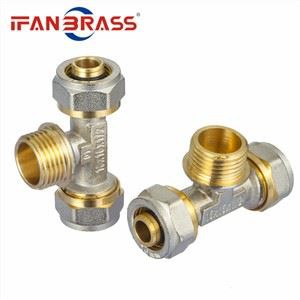


Research on Graphene Thermal Conductivity Modification Technology for Copper Pipe Fittings
Introduction to Thermal Management in Copper Pipe Fittings
Copper pipe fittings are widely used in HVAC, plumbing, and thermal systems due to their excellent conductivity.
However, with rising demands in precision cooling and energy efficiency, traditional copper materials face performance limits.
Improving thermal conductivity and maintaining mechanical stability are key to meeting advanced industrial requirements.
Graphene, known for its exceptional thermal properties, offers new potential for enhancing copper pipe fittings.
This article explores how graphene-based modification can revolutionize the thermal management of copper components.
Why Graphene? A Material with Superior Thermal Properties
Graphene is a two-dimensional carbon material with a thermal conductivity exceeding 5000 W/m·K.
It also possesses high mechanical strength and excellent chemical stability.
When applied in composites, graphene significantly enhances thermal transfer without compromising material integrity.
In copper applications, graphene forms thermally conductive networks, reducing resistance across surfaces and joints.
Its lightweight nature and flexibility make it ideal for integration into copper alloys and coatings.
Methods of Integrating Graphene with Copper Fittings
There are several strategies for incorporating graphene into copper pipe fittings.
These include powder metallurgy, electroplating, and surface coating techniques.
In powder metallurgy, graphene nanoplatelets are blended with copper powder and sintered into shape.
Electrochemical deposition allows uniform graphene layering over copper surfaces, enhancing interface conductivity.
Alternatively, graphene-based inks can be applied through dip or spray coating for surface-level modification.
Each method offers specific benefits depending on the required performance, cost, and application environment.
Impact on Thermal Conductivity Performance
Experiments show that even 1% graphene by volume can increase copper's thermal conductivity by 10–30%.
Graphene forms efficient heat paths, reducing thermal resistance within the pipe wall and joints.
This improvement is critical in systems requiring precise thermal control, such as solar heating or industrial cooling loops.
In thermal imaging tests, graphene-enhanced copper fittings show more uniform and faster heat distribution.
These results confirm that graphene plays a transformative role in managing heat flow in copper systems.
Mechanical and Corrosion Resistance Advantages
Besides thermal improvements, graphene-modified copper also gains in mechanical and corrosion performance.
Graphene reinforces copper's structure, reducing crack formation during thermal expansion or pressure cycling.
Its chemical inertness protects the fitting surface from oxidation, extending service life.
This is especially valuable in corrosive environments such as marine installations or acidic process fluids.
Thus, graphene modification improves both performance and durability in critical plumbing applications.
Real-World Applications and Case Studies
Several prototype systems have tested graphene-modified copper pipe fittings in real-world conditions.
For example, in a solar thermal loop, the fittings improved energy transfer efficiency by over 15%.
Another case in a semiconductor cooling system showed reduced thermal lag and higher operational stability.
In HVAC systems, the fittings maintained lower temperature gradients, improving room comfort and reducing energy use.
These trials demonstrate that graphene-enhanced copper is both practical and effective in diverse sectors.
Challenges in Manufacturing and Scalability
Despite its benefits, several challenges remain in applying graphene at scale in copper production.
Uniform dispersion of graphene within the copper matrix is difficult due to agglomeration issues.
Cost of high-quality graphene and processing technology remains a barrier to mass-market adoption.
Furthermore, ensuring consistent bonding between graphene and copper is critical for performance.
Ongoing research focuses on improving production methods and reducing costs for commercial implementation.
Future Development and Market Outlook
The future of graphene in copper pipe fittings looks promising as material science advances.
Nano-engineered composites and automated coating processes will improve quality and lower manufacturing barriers.
Integration with smart thermal systems and sensors is another emerging area for development.
With growing demand for energy-efficient and high-performance plumbing solutions, market potential is strong.
In coming years, graphene-modified fittings may become the standard in high-demand sectors like aerospace and precision cooling.
Conclusion
The research on graphene thermal conductivity modification technology for copper pipe fittings shows great potential.
Through improved heat transfer, structural durability, and corrosion resistance, graphene enhances the utility of copper in critical applications.
Although challenges remain, advancements in processing and materials science are paving the way for scalable solutions.
This technology promises to redefine performance standards in the thermal and fluid transport industry.
Contact IFAN
Phone: +86 15088288323
Email: Sales24-Ifan@Ifangroup.Com