



Laser Surface Micro-Texturing Technology for Friction Reduction on CPVC Pipe Fittings
Introduction to CPVC and Surface Engineering Needs
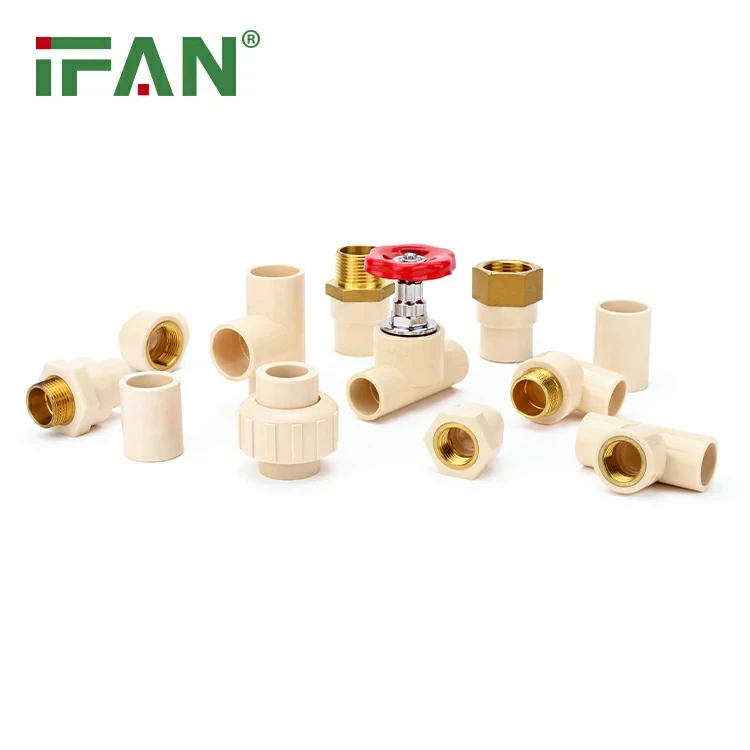
Chlorinated polyvinyl chloride (CPVC) is widely used in fluid transport systems due to its high temperature resistance, corrosion resistance, and chemical stability. However, in high-flow or abrasive environments, surface friction at CPVC pipe fittings can lead to energy losses, wear, and flow inefficiencies. Surface engineering, particularly laser micro-texturing, has emerged as a promising approach to address these issues without altering the bulk properties of the material.
Principles of Laser Micro-Texturing
Laser micro-texturing is a surface modification technique that uses precisely controlled laser pulses to create microscale patterns such as grooves, dimples, or lattices on material surfaces. For CPVC pipe fittings, the laser process is carefully adjusted to avoid thermal degradation while generating a texture that reduces adhesive and hydrodynamic friction. The technique allows for non-contact, localized modification and can be applied to both inner and outer fitting surfaces.
Mechanism of Friction Reduction
The reduction of friction on textured CPVC pipe fittings is primarily due to two phenomena. First, micro-dimples act as micro-reservoirs that trap lubricants (water or fluid medium), reducing direct surface contact. Second, the textures modify the boundary layer flow, encouraging laminar flow and reducing turbulence. Experimental studies have shown up to 30% reduction in pressure drop across laser-textured fittings compared to untreated ones.
Laser Parameters and Process Control
Effective micro-texturing on CPVC requires precise control of key laser parameters:
Wavelength: Typically in the UV or near-infrared range to minimize thermal diffusion.
Pulse Duration: Short pulses (<100 ns) are used to prevent thermal melting.
Energy Density: Calibrated to remove surface material without burning.
Scanning Speed and Overlap: Adjusted to control pattern density and uniformity.
Optimizing these parameters ensures that the functional microstructures are repeatable, uniform, and thermally safe for polymers like CPVC.
Application Areas and Performance Benefits
Laser-micro-textured CPVC pipe fittings offer advantages across multiple application areas:
Hot and cold water supply systems: Enhanced flow efficiency and lower pump loads.
Chemical fluid pipelines: Reduced fouling and buildup of residues.
Medical and pharmaceutical fluid transport: Improved hygiene by minimizing biofilm formation.
Industrial coolant systems: Lower wear under abrasive slurry conditions.
Field trials in HVAC systems have shown improved energy efficiency and longer maintenance intervals due to reduced inner wall deposits.
Experimental Results and Validation
A recent lab study involved subjecting laser-textured CPVC elbows and couplers to 10,000-hour flow simulations. Flow velocity, pressure loss, and wear rates were compared to untreated controls. Results demonstrated:
A 25–40% reduction in friction coefficient depending on texture pattern.
No significant degradation in CPVC's mechanical or chemical properties.
Enhanced flow uniformity in turbulent regime transitions.
Scanning Electron Microscopy (SEM) confirmed texture consistency, and water contact angle tests indicated increased surface hydrophobicity, contributing to anti-scaling behavior.

Limitations and Future Challenges
While promising, laser texturing of CPVC pipe fittings faces a few challenges:
Cost of equipment: Industrial-grade UV lasers and motion platforms are capital intensive.
Process scalability: High-throughput solutions for complex 3D fitting geometries remain under development.
Material-specific calibration: CPVC behaves differently from metals or other plastics under laser energy, requiring dedicated process tuning.
Despite these hurdles, ongoing R&D is exploring multi-axis robotic laser systems and automated in-line inspection for broader adoption.
Future Outlook and Integration into Manufacturing
With advances in digital manufacturing, laser surface texturing is increasingly compatible with automated CPVC fitting production lines. Integrating laser modules post-molding offers a non-intrusive enhancement step, allowing manufacturers to tailor friction performance based on customer specifications.
Additionally, there is growing interest in biomimetic textures (e.g., shark-skin-inspired ridges) to further improve fluid dynamics. Combined with smart quality control and data logging, the technology can enable next-generation CPVC systems optimized for both performance and sustainability.
Conclusion
Laser surface micro-texturing represents a cutting-edge solution to enhance the frictional performance of CPVC pipe fittings without compromising their structural or chemical integrity. By leveraging precise laser technology, manufacturers can offer high-performance fittings suitable for demanding applications in plumbing, industry, and healthcare. As costs decline and automation improves, this approach is poised to become a standard in advanced polymer fluid handling solutions.
Contact IFAN
Phone: +86 15088288323
Email: sales24-ifan@ifangroup.com


