


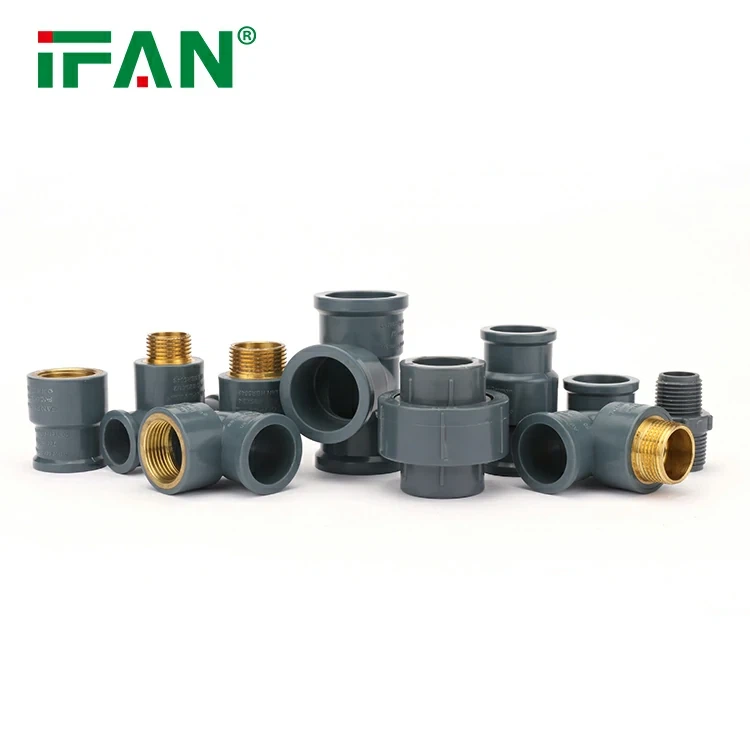


Corrosion Resistance Optimization of CPVC Pipe Fittings in Hydrochloric Acid Media
Introduction to CPVC in Chemical Applications
Chlorinated Polyvinyl Chloride (CPVC) is widely used in industrial piping systems.
Its chemical resistance and thermal stability make it ideal for aggressive media handling.
Among these, hydrochloric acid (HCl) is a highly corrosive agent used in chemical industries.
Properly engineered CPVC pipe fittings offer excellent performance in HCl environments.
However, long-term exposure to concentrated acid poses challenges to system durability.
This article explores how CPVC's corrosion resistance in hydrochloric acid media is optimized.
It focuses on formulation, additives, structural enhancements, and testing protocols.
Material Composition and Acid Resistance Mechanism
CPVC is derived by chlorinating conventional PVC resin to increase chlorine content.
The higher chlorine ratio enhances chemical resistance, especially against mineral acids.
Hydrochloric acid does not react aggressively with CPVC at moderate concentrations.
However, prolonged exposure to high-concentration acid can cause molecular chain scission.
To combat this, manufacturers refine resin purity and eliminate residual stress.
CPVC pipe fittings also incorporate stabilizers and antioxidants to resist oxidative degradation.
The material's dense matrix structure helps minimize acid permeation and swelling.
Role of Additives in Corrosion Optimization
Corrosion resistance can be improved through advanced additive formulations.
Antioxidants, UV inhibitors, and impact modifiers are used in CPVC compounding.
In acid environments, additives reduce oxidative embrittlement and surface degradation.
Particularly, stabilizers that resist acid-catalyzed dehydrochlorination are crucial.
For example, tin-based or calcium-zinc stabilizers enhance chemical longevity.
In some cases, special fluoropolymer coatings may be applied to the inner surface.
These modifications allow CPVC pipe fittings to sustain structural integrity in harsh acids.

Structural Design and Wall Thickness Considerations
Design features significantly affect the corrosion resistance of plastic piping systems.
CPVC pipe fittings for acid transport are often manufactured with thicker walls.
Thicker walls reduce permeation and withstand mechanical stress during thermal cycling.
Stress concentration zones such as elbows, tees, and threaded joints require reinforcement.
Manufacturers employ injection molding techniques that minimize weld lines and voids.
Proper flange selection, O-ring compatibility, and secure fastening also prevent leaks.
Stress-relieving during cooling reduces internal residual stress prone to acid attack.
Laboratory Corrosion Testing Methodologies
Evaluating CPVC performance in hydrochloric acid requires standardized test conditions.
Common tests include immersion, weight loss, tensile strength, and surface microscopy.
CPVC pipe fittings are submerged in various HCl concentrations (e.g., 10%, 20%, 37%).
Samples are monitored over weeks or months at controlled temperatures (25–60°C).
Changes in mass, mechanical strength, and surface roughness indicate degradation.
Fourier-transform infrared spectroscopy (FTIR) and SEM help detect molecular and microstructural changes.
Testing ensures materials meet safety and longevity requirements for chemical handling.
Real-World Applications and Case Studies
CPVC is widely adopted in electroplating plants, battery manufacturing, and acid storage.
A battery factory in Malaysia replaced stainless steel piping with CPVC pipe fittings.
After three years of use with 33% hydrochloric acid, fittings showed minimal degradation.
This success was attributed to optimal wall thickness and the use of acid-resistant seals.
Another case in Germany involved a chemical loading terminal using CPVC over metal.
Reduced maintenance and improved safety confirmed CPVC's suitability in HCl service.
Such case studies validate laboratory data and encourage wider adoption of CPVC systems.

Maintenance and Installation Practices
Even chemically resistant materials require proper installation and maintenance.
Incorrect solvent welding or over-tightened connections may cause premature failure.
When installing CPVC pipe fittings in HCl systems, use acid-resistant joint sealants.
Flush systems after shutdowns to avoid acid concentration increase due to evaporation.
Visually inspect for discoloration, swelling, or cracking during regular checks.
Avoid mechanical stress during handling and support pipes adequately to prevent sagging.
Following these best practices extends the lifespan of fittings in corrosive settings.
Future Trends and Material Innovations
Research continues into making CPVC even more robust for chemical applications.
Nanocomposite additives may improve barrier properties against hydrochloric acid.
Cross-linked CPVC structures are being tested for high-impact resistance and longevity.
3D printing of CPVC pipe fittings for custom acid systems is gaining attention.
Material scientists are also exploring dual-layer piping: CPVC core with fluoropolymer lining.
These innovations promise higher safety, reduced maintenance, and broader use in industry.
As demand grows for corrosion-resistant plastics, CPVC remains a strong candidate.
Conclusion
CPVC pipe fittings offer reliable resistance in hydrochloric acid environments with proper design.
Through advanced compounding, structural enhancements, and thorough testing, CPVC performance is optimized.
Its use continues to expand in chemical industries, thanks to its cost-effectiveness and durability.
With continuous innovation, CPVC will meet even more demanding chemical handling challenges in the future.
Contact IFAN
Phone: +86 15088288323
Email: sales24-ifan@ifangroup.com


