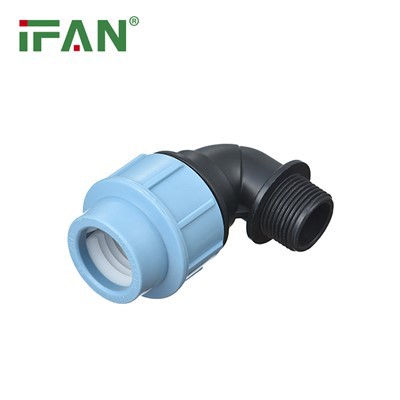


PP Bibcock (Polypropylene Bibcock) and other plastic bibcocks (such as PVC or CPVC bibcocks) are types of valves used to control the flow of water in plumbing systems. While they share some similarities, there are key differences in terms of material properties, performance, and applications. Below is a detailed comparison to help you understand the differences:
1. Material Composition
PP Bibcock:
Made from Polypropylene (PP), a thermoplastic polymer known for its chemical resistance, durability, and flexibility.
Other Plastic Bibcocks (e.g., PVC, CPVC):
PVC (Polyvinyl Chloride): Rigid and lightweight, but less resistant to high temperatures and certain chemicals.
CPVC (Chlorinated Polyvinyl Chloride): Similar to PVC but with improved temperature and chemical resistance.
2. Temperature Resistance
PP Bibcock:
Can withstand temperatures up to 95°C (203°F) for short periods and 70°C (158°F) for continuous use.
PVC Bibcock:
Suitable for temperatures up to 60°C (140°F).
CPVC Bibcock:
Can handle higher temperatures, up to 93°C (200°F).
3. Chemical Resistance
PP Bibcock:
Highly resistant to a wide range of chemicals, acids, and alkalis, making it ideal for industrial and aggressive environments.
PVC Bibcock:
Resistant to many chemicals but may degrade when exposed to strong acids, alkalis, or solvents.
CPVC Bibcock:
Better chemical resistance than PVC but still less resistant than PP.
4. Durability and Strength
PP Bibcock:
Flexible and impact-resistant, making it less likely to crack under stress.
PVC Bibcock:
Rigid and lightweight but more prone to cracking under impact or stress.
CPVC Bibcock:
Stronger than PVC but still less flexible than PP.
5. Applications
PP Bibcock:
Ideal for industrial applications, chemical transport, and hot water systems due to its high temperature and chemical resistance.
PVC Bibcock:
Commonly used in cold water systems, irrigation, and low-pressure applications.
CPVC Bibcock:
Suitable for hot and cold water systems, especially in residential and commercial plumbing.
6. Installation and Maintenance
PP Bibcock:
Requires heat fusion welding for installation, creating a strong, leak-proof connection.
Low maintenance due to its resistance to corrosion and scaling.
PVC Bibcock:
Installed using solvent welding or threaded connections.
Requires regular inspection to prevent cracking or degradation.
CPVC Bibcock:
Installed using solvent welding or threaded connections.
More durable than PVC but still requires periodic maintenance.
7. Cost
PP Bibcock:
Generally more expensive than PVC but offers better performance in demanding environments.
PVC Bibcock:
Most cost-effective option but limited to low-temperature and low-pressure applications.
CPVC Bibcock:
Moderately priced, offering a balance between cost and performance.
8. Environmental Impact
PP Bibcock:
Recyclable and environmentally friendly.
PVC Bibcock:
Less environmentally friendly due to the release of harmful chemicals during production and disposal.
CPVC Bibcock:
Similar environmental concerns as PVC but with improved performance.
Summary of Differences
| Feature | PP Bibcock | PVC Bibcock | CPVC Bibcock |
|---|---|---|---|
| Material | Polypropylene (PP) | Polyvinyl Chloride (PVC) | Chlorinated Polyvinyl Chloride (CPVC) |
| Temperature Resistance | Up to 95°C (short-term) | Up to 60°C | Up to 93°C |
| Chemical Resistance | Excellent | Moderate | Good |
| Durability | High (flexible and impact-resistant) | Moderate (rigid and prone to cracking) | High (stronger than PVC) |
| Applications | Industrial, chemical, hot water | Cold water, irrigation | Hot and cold water systems |
| Installation | Heat fusion welding | Solvent welding or threaded | Solvent welding or threaded |
| Cost | Higher | Lowest | Moderate |
| Environmental Impact | Recyclable and eco-friendly | Less eco-friendly | Less eco-friendly |
Conclusion
Choose PP Bibcock for high-temperature, chemical-resistant, and industrial applications.
Choose PVC Bibcock for low-cost, low-pressure, and cold water systems.
Choose CPVC Bibcock for residential and commercial hot and cold water systems with moderate chemical resistance.
Each type of bibcock has its unique advantages, so the choice depends on your specific requirements, such as temperature, chemical exposure, and budget.
Contact IFAN
Phone:+86 15088288323
Email:Sales24-Ifan@Ifangroup.Com