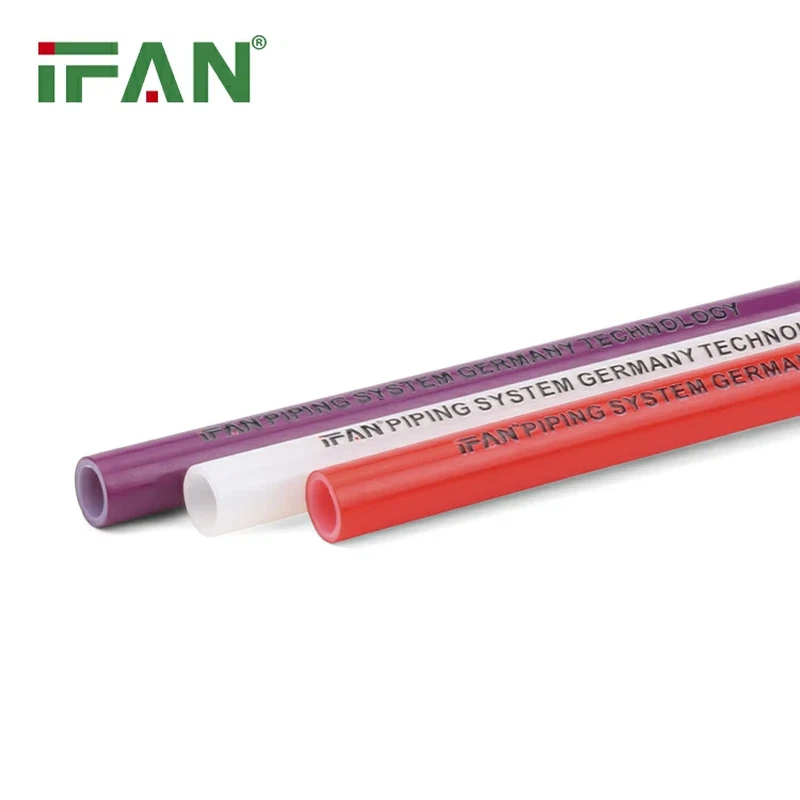
Choosing between PEX-A, PEX-B, and PEX-C depends on your application and priorities, as each type offers distinct advantages and drawbacks. Here's a detailed comparison to help determine which is better for your needs:
PEX-A: Superior Flexibility and Durability
How It's Made: Produced using the Engel method, which results in the highest degree of crosslinking (about 80-85%).
Key Advantages:
-Flexibility: Extremely flexible, making it easy to install, especially in tight spaces or around corners.
-Memory Effect: Can revert to its original shape when expanded, making it ideal for cold expansion fittings.
-Freeze Resistance: Less likely to crack in freezing conditions due to its flexibility.
-Smooth Installation: Reduces the risk of kinking.
Disadvantages:
-Cost: Generally the most expensive type of PEX.
-Availability: May not be as readily available as PEX-B.
-Best Applications: High-end residential plumbing, radiant heating systems, and installations requiring a lot of bending or flexibility.
PEX-B: Cost-Effective and Durable
How It's Made: Produced using the Silane method, which achieves a lower degree of crosslinking (about 65-70%).
Key Advantages:
-Affordability: More cost-effective than PEX-A.
-Durability: Resistant to chlorine and oxidative degradation, making it suitable for potable water systems.
-Availability: Widely available in the market.
Disadvantages:
-Stiffness: Less flexible than PEX-A, making installation more challenging.
-Kink Resistance: Kinks are harder to repair and may require cutting and splicing.
-Fitting Options: Does not support expansion fittings and requires crimp or clamp fittings.
-Best Applications: Budget-friendly residential and commercial plumbing systems, especially where flexibility is not a priority.
PEX-C: Least Expensive but Less Durable
How It's Made: Produced using the Irradiation method, resulting in the lowest crosslinking degree (about 70%).
Key Advantages:
-Cost: Typically the least expensive option.
-Flexibility: More flexible than PEX-B but less so than PEX-A.
-Good for Retrofits: Suitable for small repairs or low-demand systems.
Disadvantages:
-Durability: Lower resistance to cracking and oxidative damage compared to PEX-A and PEX-B.
-Kinks: Prone to kinking, and repairs may not be as reliable.
-Best Applications: Small-scale or temporary plumbing projects, or systems where cost is the primary concern.
Which is Better?
Choose PEX-A: If flexibility, durability, and freeze resistance are crucial. It's ideal for complex installations and long-term reliability.
Choose PEX-B: For budget-conscious projects where durability and availability are important but extreme flexibility isn't necessary.
Choose PEX-C: For cost-sensitive, small-scale applications or repairs, though it's less common and generally not as durable.
In summary:
PEX-A is the best for premium quality and ease of installation.
PEX-B offers a balance of durability and affordability.
PEX-C is the least expensive but not as robust for demanding applications.
Contact IFAN
Phone:+86 15088288323 Email:sales24-ifan@ifangroup.com