


A Study on Long-Term Creep Behavior of PEX Fittings in Underfloor Heating Systems
Introduction to Underfloor Heating and PEX Fittings
Underfloor heating systems are gaining popularity due to their energy efficiency and comfort.
They work by circulating warm water through a network of pipes beneath the floor.
PEX (cross-linked polyethylene) pipes and fittings are commonly used in these systems.
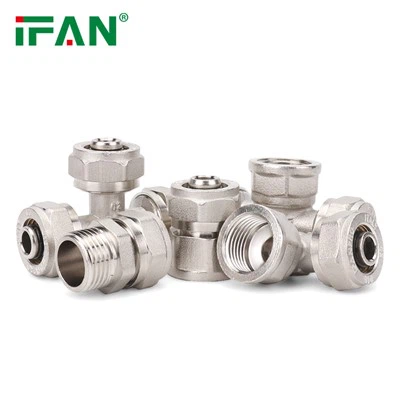
PEX fittings are critical for connecting pipe segments and ensuring leak-free operation.
However, under long-term heat and pressure, PEX materials can experience a phenomenon known as "creep."
This study focuses on understanding the long-term creep behavior of PEX fittings under floor heating conditions.
Understanding Creep in Polymeric Materials
Creep is the gradual deformation of materials under constant stress over time.
In polymer systems, this behavior is influenced by temperature, pressure, and time.
PEX, being a thermoplastic material, is especially susceptible to creep at elevated temperatures.
For underfloor heating systems that operate continuously at 40–60°C, this effect becomes critical.
Creep can lead to dimensional instability, leakage, or even mechanical failure of fittings.
Understanding creep characteristics is essential for long-term reliability in residential and commercial installations.
Material Properties and PEX Classification
PEX materials are available in three types: PEX-A, PEX-B, and PEX-C, differentiated by their cross-linking methods.
PEX-A uses the peroxide method, resulting in high flexibility and good thermal resistance.
PEX-B uses silane-based cross-linking, offering better shape memory and affordability.
PEX-C involves electron beam radiation, providing good dimensional stability.
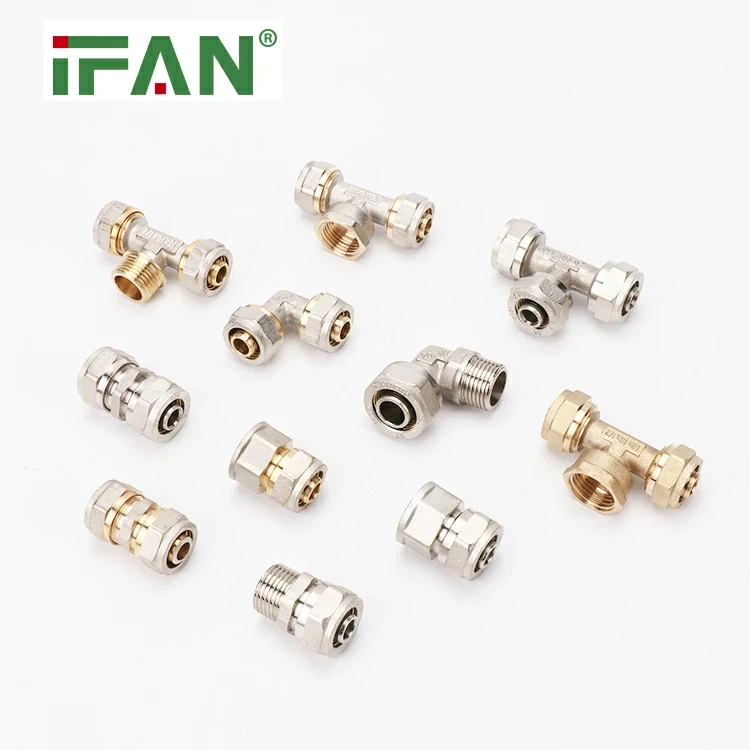
Fittings made of brass or high-performance polymers must match the creep performance of PEX tubing.
Material selection significantly affects how the PEX system resists long-term deformation.

Laboratory Test Methodology for Creep Behavior
To study creep, long-duration tensile and compression tests were conducted on various PEX fitting configurations.
Samples were subjected to constant load at elevated temperatures (typically 60°C) for up to 1,000 hours.
Dimensional changes, crack initiation, and material flow were closely monitored.
Microscopic analysis and strain gauges were used to quantify deformation over time.
Results were compared between different PEX grades and fitting materials to determine relative performance.
Test methods followed ASTM D2990 and ISO 899 standards for creep testing in plastics.
Key Findings on Creep Performance
Tests showed that PEX-A fittings exhibited superior resistance to long-term deformation.
They maintained structural integrity even after 1,000 hours at elevated temperature.
PEX-B fittings displayed moderate creep behavior, with some permanent elongation observed.
PEX-C fittings performed adequately but showed early signs of stress whitening.
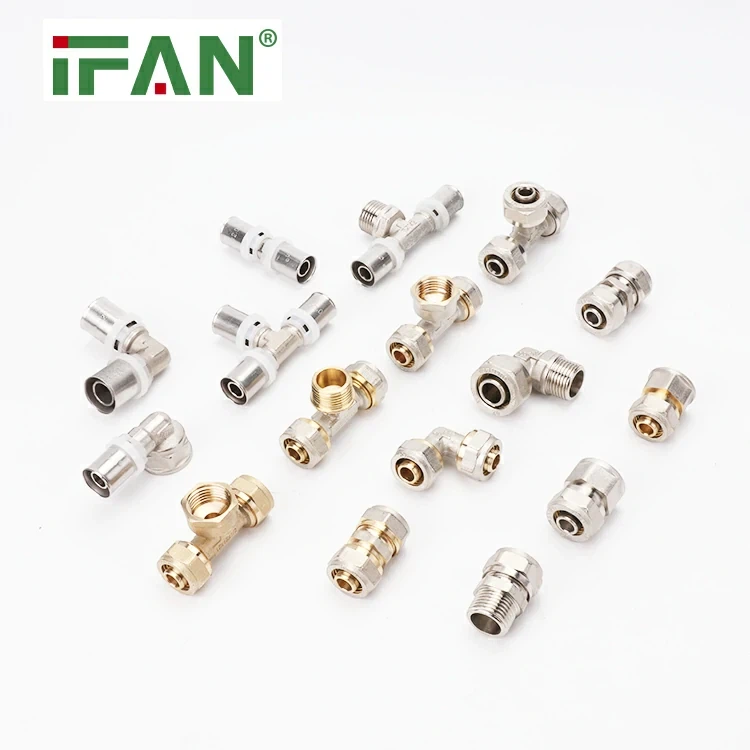
Brass fittings demonstrated minimal creep but required additional support to prevent pipe slippage.
Polymer-based PEX fittings showed more noticeable deformation, particularly under high internal pressure.
Reinforced designs with support collars improved performance significantly.
Impact of System Design and Installation Practices
Creep is influenced not just by material but also by how the system is installed and used.
Over-tightened fittings or improperly supported pipe networks can accelerate creep deformation.
Expansion loops and flexible joint placement can alleviate stress concentrations.
Proper spacing between clips and secure anchoring of fittings reduce strain on the material.
Thermal cycling, common in underfloor heating, can exacerbate creep over time.
Therefore, best practices during installation are critical for minimizing long-term deformation.
Implications for System Reliability and Maintenance
Creep can lead to joint misalignment, water leakage, or even rupture in extreme cases.
In underfloor systems, these failures are costly and disruptive due to concealed installation.
Understanding the creep limits of PEX fittings helps engineers design safer, longer-lasting systems.
Manufacturers are now integrating anti-creep geometries and reinforcement features in fittings.
Regular pressure checks and infrared inspections are recommended for aging heating systems.
Preventive maintenance can detect early deformation signs before critical failure occurs.
Recommendations for Industry Application
Based on the study, several practical recommendations can be made:
Use PEX-A or high-grade fittings for systems operating continuously above 50°C.
Choose brass or composite-reinforced fittings for high-pressure zones.
Ensure installation guidelines for joint spacing and thermal expansion are followed.
Avoid exposure to UV light or chemicals that can accelerate aging of fittings.
Consider periodic inspection protocols for buildings over 10 years old.
Adopting these practices improves both safety and service life of underfloor heating systems.
Conclusion
The long-term creep behavior of PEX fittings plays a vital role in the durability of underfloor heating systems.
Material choice, system design, and installation quality all influence how the fittings respond to long-term stress.
Through laboratory studies and field data, it is clear that properly selected and maintained fittings can serve reliably for decades.
Future innovation may include creep-resistant polymers, embedded sensors, or smart materials to further enhance performance.
Contact IFAN
Phone: +86 15088288323
Email: sales24-ifan@ifangroup.com