

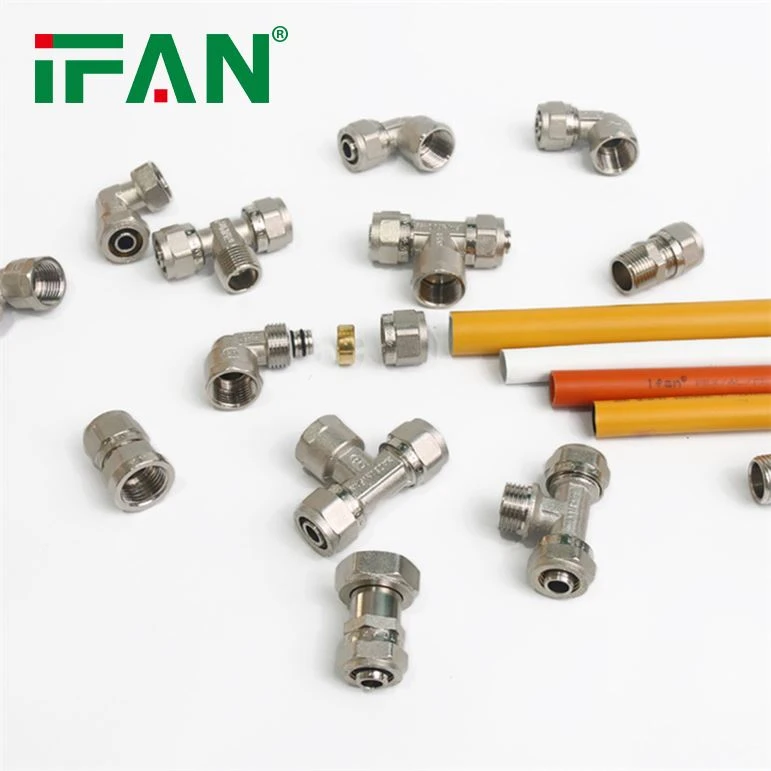


IFAN Leakproof GB-T 18992 PEX Compression Fittings
IFAN Leakproof performance requires precision manufacturing and consistent material quality.
PEX compression fittings must withstand pressure, thermal expansion, and mechanical stress.
Design geometry must align under torque without slippage.
Each fitting must be tested under both dry and wet conditions.
Sealing elements should maintain uniform contact across all surfaces.
Sealing rings must compress evenly without over-tightening.
Thread pitch and depth must ensure tight axial alignment.
Fittings should retain structure during installation torque cycles.
Each component must interlock with minimum tolerance variance.
Leakproof fittings depend on dimensional consistency from batch to batch.
Material Composition and Surface Quality
Materials must exhibit low porosity and high stability.
Surface finish affects sealing ring adherence and deformation.
Inner and outer surfaces must remain smooth and uniform.
Machined brass parts must resist surface cracking and pitting.
Polymer inserts should maintain dimensional integrity under compression.
All materials must be free from surface contaminants.
Microscopic inclusions can interfere with sealing efficiency.
Surface coatings must remain bonded under repeated pressure.
Consistency in alloy composition ensures uniform thermal response.
Testing verifies each lot for structure and finish.
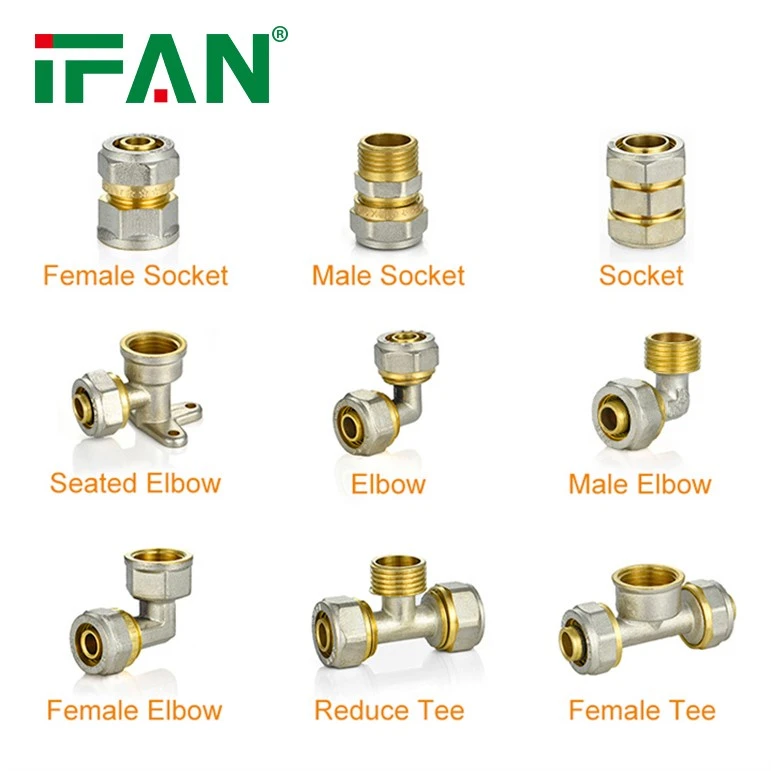
Thread Precision and Mechanical Engagement
Thread angles must meet standardized engagement criteria.
Male and female threads must align under measured force.
Thread root and crest form affects compression strength.
Misaligned threads compromise leakproof performance under pressure.
Torque control prevents overstressing internal contact surfaces.
Threads must not deform under installation force.
Thread depth affects compression nut stability.
Pitch irregularities can introduce micro-gaps in sealing zones.
Precision threading machinery eliminates misalignment risk.
Each threaded unit undergoes inspection before final assembly.
Sealing Mechanism Consistency
Sealing components must function under variable pressure conditions.
O-rings must retain elasticity through temperature variation.
Ring diameter must match bore diameter within tight limits.
Compression sleeves must compress evenly around pipe diameter.
Seals must resist extrusion under cyclic loading.
Static seals must maintain contact under deformation.
Seal material must not crack or split during use.
Installation torque must fully seat the seal.
Elastomer degradation tests simulate long-term exposure.
Seal groove depth must be exact for uniform load.
Assembly Torque Control
Torque levels must match fitting design limits.
Insufficient torque creates internal misalignment and gaps.
Excessive torque may deform compression rings or threads.
Torque must distribute pressure along the sealing ring.
Tools used in assembly must be calibrated.
Repeatable torque ensures consistent leakproof assembly.
Dry-run tests evaluate torque versus deformation trends.
Seal engagement must occur before mechanical lock.
Over-tightening must not collapse the fitting walls.
Torque profiles are recorded during production audits.
Dimensional Uniformity Across Components
Bore diameter must match pipe outer diameter exactly.
Any deviation creates uneven compression zones.
Tolerance stack-up must not affect sealing regions.
Ring seating grooves must not exceed design depth.
Component interfaces must remain flush under load.
Compression sleeve taper must match pipe angle.
Axial length affects seal seating during tightening.
Wall thickness variation must stay within 0.02 mm.
Each fitting is measured after final machining.
Dimensional checks ensure pressure-tight sealing under all conditions.
Thermal Cycling Endurance
Fittings must retain form after repeated temperature shifts.
Material expansion must not alter sealing effectiveness.
Compression rings must remain springy during cooling.
Seals must not shift due to contraction.
All parts must resist thermal stress cracking.
Laboratory tests simulate 1,000+ thermal cycles.
Post-cycle testing confirms seal retention and leakproof status.
Component spacing must remain unchanged after temperature cycling.
Threads must stay aligned without loosening.
Expansion rates are matched across all materials.
Pressure Integrity Testing
Each fitting undergoes high-pressure water testing.
Test pressure exceeds normal service levels by 50%.
Fittings are held at pressure for 60 minutes.
No water seepage is allowed during this test.
Post-pressure drying ensures no internal residue remains.
Hydrostatic burst tests confirm structural strength.
Visual inspection follows each pressure cycle.
Fittings that fail are tagged and isolated.
All results are logged and batch-tracked.
Only verified fittings proceed to packaging.
Vibration and Shock Resistance
Leakproof fittings must tolerate mechanical disturbance.
Simulated pipe vibration is applied over 24 hours.
Seals must remain stable during axial movement.
Threads must not loosen under oscillation.
Compression rings must not slip from position.
Shock tests simulate sudden impact on joints.
Vibration testing detects resonance-related deformation.
Shock events must not dislodge seals.
Fittings are tested with real pipe sections.
Seal integrity is re-verified after test completion.
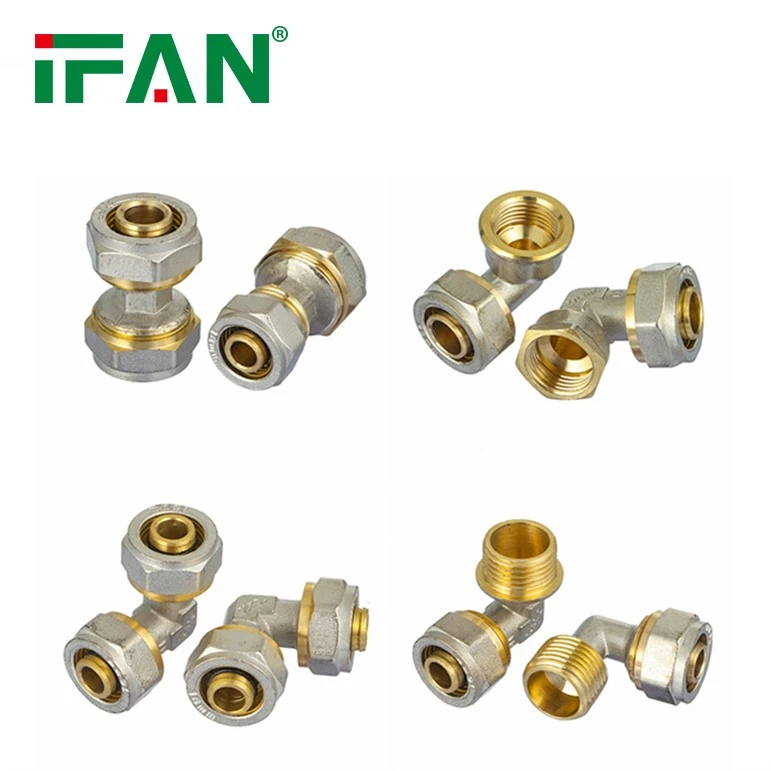
Final Quality Verification and Packaging
Each fitting is tagged with a serial code.
QA teams perform final dimensional verification.
Bore cleaning removes debris before sealing.
Assembly sequence is confirmed during inspection.
Leak tests are conducted on sample units.
Pressure, torque, and seal records are stored.
Fittings are vacuum-sealed to prevent contamination.
Labeling includes batch number and trace information.
Packaging prevents distortion during storage or shipping.
Storage conditions are temperature and humidity controlled.
Conclusion: Leakproof Performance by Design
Leakproof fittings depend on every stage of production.
Precision machining ensures exact mechanical interface.
Seals must be perfectly compressed and aligned.
Material properties must remain stable under stress.
Each fitting must pass pressure and vibration tests.
Assembly torque must meet exact requirements.
Thermal cycling should not shift component alignment.
Final inspection ensures complete seal integrity.
Packaging preserves quality until final installation.
Leakproof fittings result from engineering, not chance.


