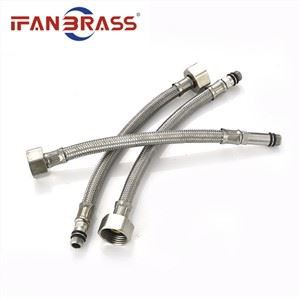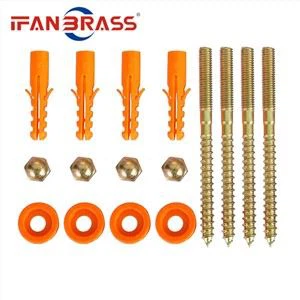


Product Information:
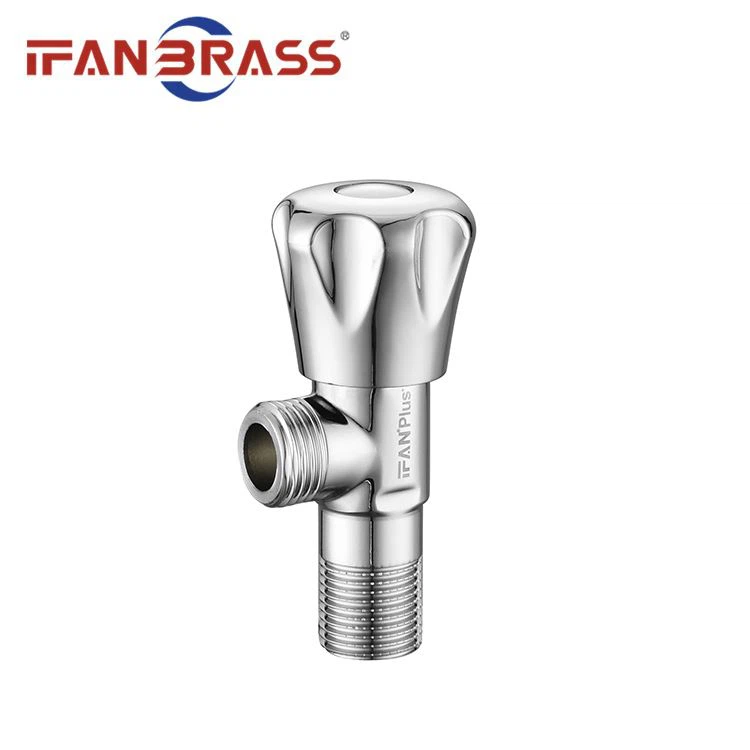
Sanitary Angle Valve is also called triangle valve, angle valve, and angled water valve. It is mostly used in the installation of water and electricity in the decoration industry and is an important plumbing fitting.
Sanitary Angle Valve is divided into two types: hot and cold (identified by blue and red signs). Most manufacturers have the same material. The hot and cold signs are mainly used to distinguish which is hot water and which is cold water.

Product Size:
Size(mm) | PCS/CTN | Weight(g/pcs) | CTN SIZE |
171 | 100 | 182.5 | 0.03 |
172 | 100 | 204 | 0.03 |
173 | 100 | 176 | 0.03 |
174 | 100 | 179 | 0.03 |
175 | 100 | 223 | 0.03 |
176 | 100 | 185 | 0.03 |
Product Features:
Angle Valve has simple flow path, small dead zone and vortex zone. With the help of the scouring effect of the medium, it can effectively prevent the medium from clogging, that is, it has better self-cleaning performance; the flow resistance is small, and the flow coefficient is larger than that of a single-seat valve. It is equivalent to the flow coefficient of a double-seat valve; it is suitable for high viscosity, suspended solids and granular fluids, or for places where right-angle piping is required. The flow direction is generally bottom in and side out, and it can be reversed under special circumstances. That is, it flows in from the side and out from the bottom.
Production process: raw materials (copper, steel, etc.) → cut according to the amount of material used → high temperature forging → machining → polishing treatment → electroplating → assembly.
There is no obvious macroscopic deformation in the fracture of the angle valve. The source of the crack is on the inner surface. The fracture is microscopically characterized by cleavage and brittle fracture. The surface corrosion products contain corrosive elements such as sulfur, oxygen, and chlorine, which are typical stress corrosion cracking characteristics. This shows that the angle valve cracking belongs to stress corrosion cracking. Metallographic inspection of the section near the cracked angle valve section showed that the crack was bifurcated. This is a typical feature of stress corrosion cracking, which further indicates that angle valve cracking belongs to stress corrosion cracking.