



Features of Brass Ball Valve
Brass ball valve is a kind of reliable sealing, simple structure and convenient maintenance. The sealing surface and spherical surface are always in a closed state, not easy to be corroded by the medium, easy to operate and easy to maintain. It is suitable for general working media such as water, solvent, acid and natural gas. Also suitable for media with harsh working conditions, such as oxygen, hydrogen peroxide, methane and ethylene, etc.
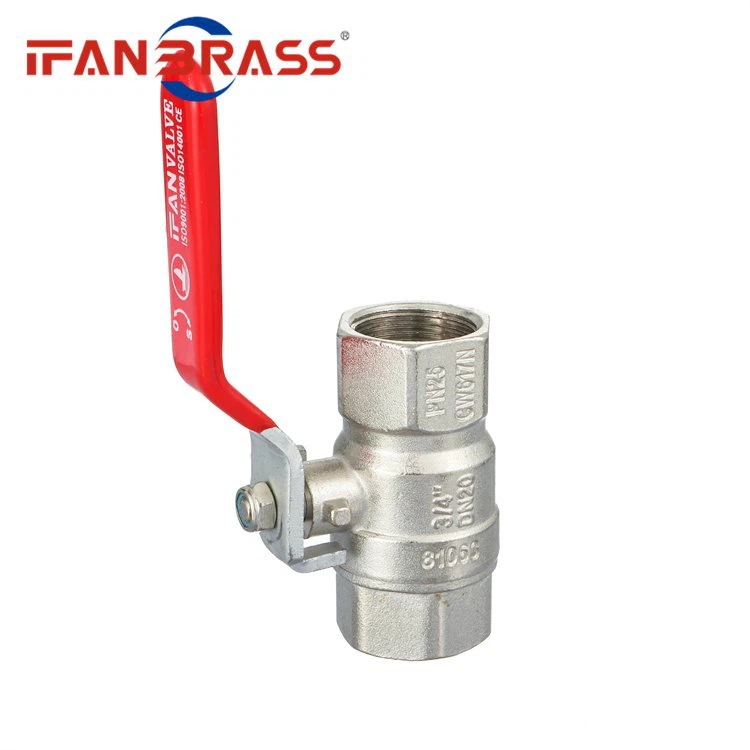
Ball valve installation:
1. Remove the protective cover on both sides of the flange end, and rinse and clean with the valve fully open.
Before installation, the whole machine should be tested according to the specified signal (electrical or gas) (to prevent the vibration caused by transportation from affecting the use performance).
2. Before preparing to connect to the pipeline, the remaining impurities in the pipeline must be rinsed and removed (these substances may damage the valve seat and ball).
3. During installation, please do not use the actuator part of the valve as a lifting point to avoid damage to the actuator and accessories.
4. This type of valve should be installed in the horizontal or vertical direction of the pipeline.
5. The pipeline near the installation point must not be sagging or subjected to external force. Pipe supports or supports can be used to eliminate the deviation of the pipeline.
6. After connecting with the pipeline, please cross-lock the flange connecting bolts with the specified torque.
7. Make sure that the pipes and valves have been flushed before operation.
8. The operation of the valve is completed by driving the valve stem to rotate according to the size of the input signal of the actuator: when the valve is rotated 1/4 turn (90°) in the forward direction, the valve is turned off. The valve opens when reversed by 1/4 turn (90°).
9. When the direction indicating arrow of the actuator is parallel to the pipeline, the ball valve is open; when the indicating arrow is perpendicular to the pipeline, the ball valve is closed.
Maintenance Precautions:
When the ball valve is closed, there is still pressurized fluid inside the valve body
Before servicing, depressurize the line and keep the ball valve in the open position
Before servicing, disconnect the power or air supply
Before servicing, disengage the actuator from the bracket
The dismantling and dismantling operations must be carried out after confirming that the upper and downstream pipelines of the ball valve have been depressurized.
During disassembly and reassembly, care must be taken to prevent damage to the sealing surfaces of parts, especially non-metallic parts, and special tools should be used when removing O-rings
The bolts on the flange must be tightened symmetrically, gradually and evenly during assembly
The cleaning agent should be compatible with the rubber parts, plastic parts, metal parts and working medium (such as gas) in the ball valve. When the working medium is gas, gasoline (GB484-89) can be used to clean metal parts. Clean non-metallic parts with pure water or alcohol
The disassembled individual parts can be cleaned by dipping. The metal parts with undecomposed non-metal parts can be scrubbed with a clean and fine silk cloth impregnated with cleaning agent (to prevent the fibers from falling off and adhering to the parts). When cleaning, all grease, dirt, glue, dust, etc. adhering to the wall must be removed
Non-metallic parts should be removed from the cleaning agent immediately after cleaning, and should not be soaked for a long time
After cleaning, it needs to be assembled after the cleaning agent on the wall to be washed has evaporated (it can be wiped with a silk cloth not soaked in the cleaning agent), but it should not be left for a long time, otherwise it will rust and be polluted by dust.
New parts also need to be cleaned before assembly
Lubricate with grease. Grease should be compatible with ball valve metal materials, rubber parts, plastic parts and working medium. When the working medium is gas, for example, special 221 grease can be used. Apply a thin layer of grease on the surface of the seal installation groove, apply a thin layer of grease on the rubber seal, and apply a thin layer of grease on the sealing surface and friction surface of the valve stem
During assembly, no metal chips, fibers, grease (except those specified for use), dust, other impurities, foreign objects, etc. shall be allowed to contaminate, adhere or stay on the surface of the parts or enter the inner cavity


