
The Two Main Failure Mechanisms
When brass pipe fittings fail, forensic engineers typically identify two primary culprits. These are dezincification (DZ) and stress corrosion cracking (SCC) . Understanding these mechanisms is the first step toward preventing future failures in your plumbing system.
What Is Dezincification?
Dezincification is a specific type of corrosion. Brass is an alloy of copper and zinc. During dezincification, the zinc reacts with chemicals in the water. It is pulled out of the brass matrix . This leaves behind a weak, spongy copper material.
The "Copper Sponge" Result
This remaining copper cannot withstand water pressure. A forensic report described zinc as "completely leached... leaving a porous matrix through the entire wall thickness" . The fitting loses all mechanical strength. Leakage becomes imminent at that location.
The Zinc Content Risk Threshold
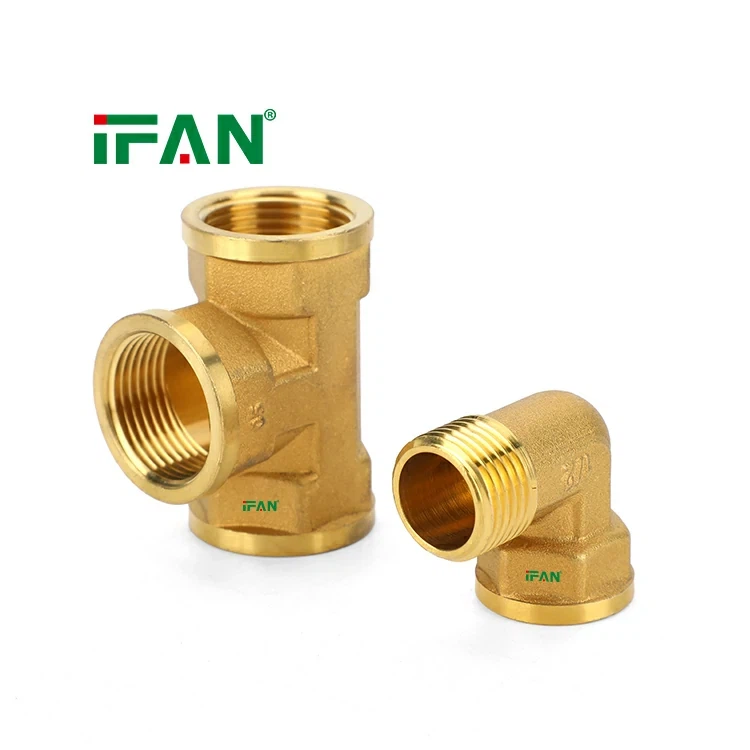
Brass with high zinc content is most vulnerable. The risk starts when zinc content is 15% or higher. The danger becomes severe at 35% zinc or more . Many standard brass pipe fittings use C36000 alloy, which has approximately 34% zinc. This alloy is highly susceptible to dezincification.
Plug Type vs. Layer Type
There are two distinct forms of dezincification. Plug type creates localized deep "spongy" areas that penetrate quickly. It occurs in neutral or alkaline water with high salt content and elevated temperatures . Layer type spreads a thin, uniform corroded layer across the surface. This happens with slightly acidic water.
The Role of Hot Water
Hot water significantly accelerates dezincification. A case study of a residential home found severe degradation "due to the high concentration of internal deposits, hot water temperature, ... and stagnant or low flow conditions" . Higher water temperatures speed up the chemical reaction. Brass pipe fittings in hot water lines fail much faster.
Chlorine and Water Chemistry
Chemicals in public water supplies contribute to the attack. Chlorine and chloramines facilitate the corrosion reaction . Water pH, chloride content, and low flow conditions all worsen the damage . A forensic investigation concluded that aggressive water chemistry was a primary factor in the fitting failures.
Stress Corrosion Cracking (SCC)
SCC is a different failure mechanism. It requires three factors combined. These are tensile stress, a corrosive environment, and a susceptible material . The higher the stress or the more corrosive the environment, the faster the cracking occurs. Brass pipe fittings under tension are at risk.
Overtightening as a Primary Stress
Installation stress is a common cause of SCC. When a plumber overtightens a threaded fitting, it creates sustained tensile stress in the metal. One source notes that overtightening creates "localized stress points, weakening the fittings over time" . This residual stress is a primary driver for future cracking.
The Ammonia Factor
Ammonia is a potent corrodent for stressed brass. Some amount of ammonia is "almost always present in public water supplies" . A very small concentration, combined with high stress and susceptible brass, causes SCC. Even industrial cleaning fluids near a system can be dangerous.
Visual Signs of Degradation
Dezincification can be hard to spot. The fitting often "remains unchanged on the outside, aside from minor discoloration" . Cracks from SCC may be visible, but internal damage is not. A fitting that appears intact can be structurally compromised. Any brass pipe fittings in hot water lines showing staining should be examined closely.
Preventive Measures
Prevention is the best strategy. Replace standard brass fittings with DZR (dezincification-resistant) brass in hot water systems . Lower your water heater temperature to slow the chemical reaction. Test your water for pH and chlorine content. If the water is aggressive, install a whole-house treatment system .
Contact IFAN
Phone:+86 15088288323
Email:Sales24-Ifan@Ifangroup.Com