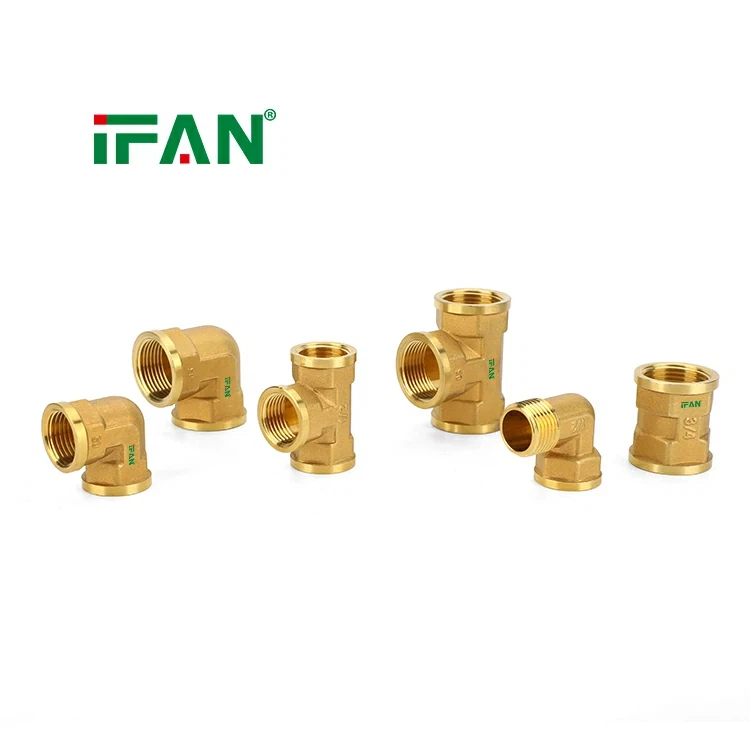
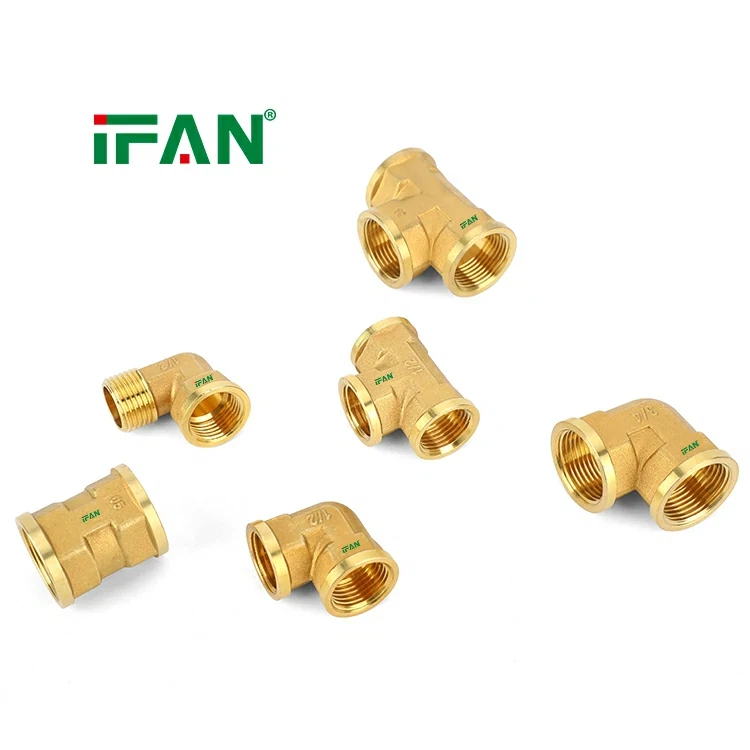
Understanding the Core Difference
The difference lies in the manufacturing process, not just the material. Casting involves pouring molten brass into a mold. Forging uses compressive force to shape heated solid brass. This fundamental distinction creates significant differences in the internal structure and performance of the final product .
How Forged Brass Fittings Are Made
Forging starts with a solid brass rod or billet. The metal is heated to a high temperature, typically between 700-850°C for brass . A powerful press or hammer then compresses the hot metal into a die of the desired shape . The forging process aligns the grain structure of the brass, eliminating internal voids and creating a very dense, uniform material .
How Cast Brass Fittings Are Made
Casting begins with melting the brass into a liquid state. This molten metal is then poured into a pre-formed mold cavity . Once cooled, the solidified metal takes the shape of the mold. The mold is then removed, revealing the rough casting . This process can create complex shapes, but the internal grain structure is less controlled. Sand casting is a common method for producing brass pipe fittings .
The Grain Structure Difference
The most critical difference is the material's grain structure. Forging realigns and compresses the metal's grains. This creates a continuous, unbroken flow of metal that follows the shape of the part . In contrast, casting produces a random, non-uniform grain structure that is more prone to defects like shrinkage cavities and porosity .
Strength and Pressure Handling
Forged fittings are significantly stronger. Their dense, forged grain structure allows them to withstand higher pressures and mechanical stresses without deforming or cracking . This makes them the preferred choice for high-pressure hydraulic systems, industrial pipelines, and critical applications . Cast fittings are generally not recommended for such demanding environments.
Durability and Long-Term Reliability
The superior grain structure also means forged fittings are more durable. They are less likely to wear out over time and exhibit better resistance to cracking from fatigue or vibration . The internal imperfections of cast parts can become initiation points for cracks under repeated stress, leading to premature failure of brass pipe fittings.
Porosity and Inclusions
Casting carries the inherent risk of internal defects. As molten metal cools, it can shrink, creating microscopic voids (porosity). Impurities can also become trapped as inclusions . Forging effectively eliminates these problems. The high compression forces weld shut any internal gaps and force the material into a completely solid, homogeneous state .
Corrosion Resistance Comparison
Forged fittings generally offer better corrosion resistance. The dense, non-porous surface of forged brass provides fewer pathways for corrosive elements to attack the metal . The random grain structure and potential porosity of cast fittings can make them more susceptible to corrosion over time, especially in harsh environments .
Dimensional Accuracy and Consistency
Forging provides a high degree of dimensional control. The process consistently produces parts with precise tolerances and a smooth surface finish . Cast parts, being formed in a mold, can have minor variations in size and a rougher surface that may require additional machining . For brass pipe fittings that must fit together perfectly, forging has an advantage.
Cost Comparison
Cast brass pipe fittings are generally less expensive to produce. The casting process consumes less energy and has lower tooling costs than forging . However, this lower initial cost is balanced by lower performance and potentially shorter service life. Forged fittings are more expensive but represent an investment in long-term reliability.
Design Flexibility
Casting offers superior design flexibility. The process can easily produce intricate shapes, complex geometries, and parts with internal passages that would be difficult or impossible to forge . This makes casting the preferred method for decorative plumbing fixtures and complex valve bodies where strength requirements are moderate.
Application Selection Guide
Choose forged brass pipe fittings for high-pressure systems, industrial hydraulics, oil and gas lines, and any application where safety and long-term reliability are paramount. Choose cast fittings for residential plumbing fixtures, low-pressure decorative applications, and projects where complex shapes are required and the budget is a primary constraint .
Summary of Key Differences
Brass pipe fittings are not all the same. Forging uses high pressure to shape solid metal, creating a dense, uniform, and exceptionally strong product. Casting uses molten metal poured into a mold, allowing for complex shapes at a lower cost but with a weaker, more porous internal structure. For high-strength, pressure-critical applications, forged is superior. For cost-sensitive, lower-pressure, decorative applications, cast is a viable option.