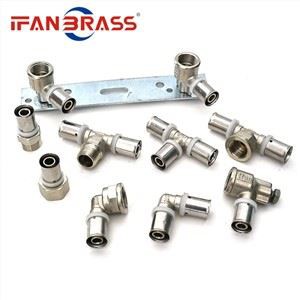


Manufacturing Standards and Quality Assurance
PEX gas press fittings manufactured under ASTM D2513 must adhere to stringent production standards to ensure consistent quality and safety. The process begins with the selection of premium-grade materials, often involving high-precision tooling and automated machinery. Manufacturers conduct rigorous testing of raw materials and final products, such as tensile strength and hydrostatic pressure resistance, to verify conformity with ASTM specifications. Advanced quality control methods, including non-destructive testing, pressure testing, and dimensional inspections, are implemented throughout the production process. Documentation and traceability protocols are strictly followed, allowing for comprehensive tracking from material sourcing to final shipment. Periodic audits and reviews of production facilities ensure ongoing compliance with ASTM D2513 standards. This systematic approach guarantees the integrity and performance of PEX gas press fittings in demanding environments.
Design Specifications and Performance Criteria
ASTM D2513 establishes precise design specifications for PEX gas press fittings to ensure uniformity and performance. These specifications include wall thickness, dimensional tolerances, and pressure ratings, which are critical for maintaining structural integrity and safety under operational conditions. Fittings are engineered to withstand specific internal pressures, accommodate thermal expansion and contraction, and resist deformation. Stress-crack resistance and impact performance are also considered during design to mitigate potential failure points. Detailed performance criteria dictate how fittings must respond under simulated service conditions, such as repeated pressurization cycles and temperature fluctuations. Through careful adherence to these specifications, manufacturers produce fittings capable of long-term, reliable service in gas distribution networks.
Testing and Verification Processes
Comprehensive testing protocols are integral to ensuring the compliance of PEX gas press fittings with ASTM D2513. Hydrostatic burst testing evaluates the maximum pressure the fittings can sustain without failure. Tensile and elongation tests assess material flexibility and strength. Additionally, environmental stress-cracking resistance tests simulate long-term exposure to gas and environmental factors. Dimensional accuracy checks verify that each fitting meets the precise measurements outlined in the standard. To ensure reliability, fittings undergo cyclic pressure testing to replicate real-world fluctuations in gas systems. Independent third-party verification of test results provides an added layer of assurance, reinforcing confidence in the safety and durability of ASTM D2513-compliant fittings.

Traceability and Certification Requirements
Traceability is a critical aspect of ASTM D2513 compliance for PEX gas press fittings. Each fitting is assigned a unique identification code or batch number, allowing it to be traced back to its manufacturing origin, raw material source, and production date. Comprehensive records are maintained to document testing outcomes, quality checks, and material certifications. Certified quality management systems, such as ISO 9001, are often integrated into manufacturing operations to enhance traceability and reliability. Certification from recognized standards organizations, such as CSA or NSF, confirms adherence to ASTM D2513 specifications. These certifications provide end-users with clear documentation that fittings meet rigorous industry standards and performance expectations.
Production Process Control Measures
Manufacturing PEX gas press fittings requires stringent control measures at each stage to maintain consistency and performance. From extrusion of the PEX material to precision machining of the fittings, every process step is carefully monitored. Automated systems regulate key parameters such as temperature, pressure, and material feed rates. In-process inspections include visual checks, dimensional verification, and mechanical performance assessments. Any deviations from specifications prompt immediate corrective action. Post-production, fittings are subjected to controlled storage and handling conditions to preserve their integrity. These comprehensive control measures ensure that each fitting not only complies with ASTM D2513 requirements but also meets customer expectations for quality and reliability.
Marking and Identification Guidelines
ASTM D2513 requires clear and permanent markings on PEX gas press fittings for easy identification and traceability. Markings include manufacturer identification, material designation, standard compliance references (e.g., ASTM D2513), and size specifications. Additional information such as pressure ratings, production dates, and certification symbols may also be included. These markings are typically applied using laser engraving or ink-jet printing techniques that resist wear and exposure to environmental conditions. Accurate and legible markings enable quick verification of compliance during inspections and audits. Proper identification also facilitates inventory management and ensures that the correct fittings are used in gas distribution systems.
Pressure Testing Protocols
Pressure testing is fundamental to confirming the performance capabilities of PEX gas press fittings. ASTM D2513 outlines hydrostatic pressure testing protocols, which involve subjecting fittings to internal pressures that exceed normal operating levels. These tests validate the integrity of the fittings under simulated service conditions, ensuring they can withstand pressure surges and long-term usage. Additional cyclic pressure tests mimic fluctuations encountered in real-world systems. Pressure testing protocols are meticulously documented, with records retained for future reference and compliance verification. The successful completion of pressure tests is a critical requirement for product approval and market release, reinforcing the reliability of PEX gas press fittings.

Regulatory and Industry Oversight
Compliance with ASTM D2513 for PEX gas press fittings is monitored by regulatory bodies and industry associations to maintain safety and performance standards. Independent certification organizations conduct periodic audits of manufacturing facilities, reviewing quality management systems, production processes, and test results. Regulatory agencies, such as the U.S. Department of Transportation (DOT) and regional public utility commissions, enforce strict guidelines for gas distribution system components. These oversight measures ensure that fittings used in gas systems meet mandatory safety standards and performance benchmarks. Continuous industry monitoring and updates to ASTM standards reflect evolving technological advancements and industry best practices.
Supplier and Distributor Responsibilities
Suppliers and distributors of ASTM D2513 PEX gas press fittings play a critical role in maintaining quality and compliance throughout the supply chain. They are responsible for verifying the authenticity of products, ensuring that fittings are sourced from certified manufacturers, and providing accurate documentation, including test reports and certification certificates. Proper storage and handling practices must be followed to prevent damage or contamination of fittings prior to installation. Training and technical support are also provided to ensure that installers and end-users understand the proper usage and compliance requirements of the fittings. This collaborative approach between manufacturers, suppliers, and end-users strengthens the integrity of gas distribution systems.
Contact IFAN
Phone:+86 15088288323