


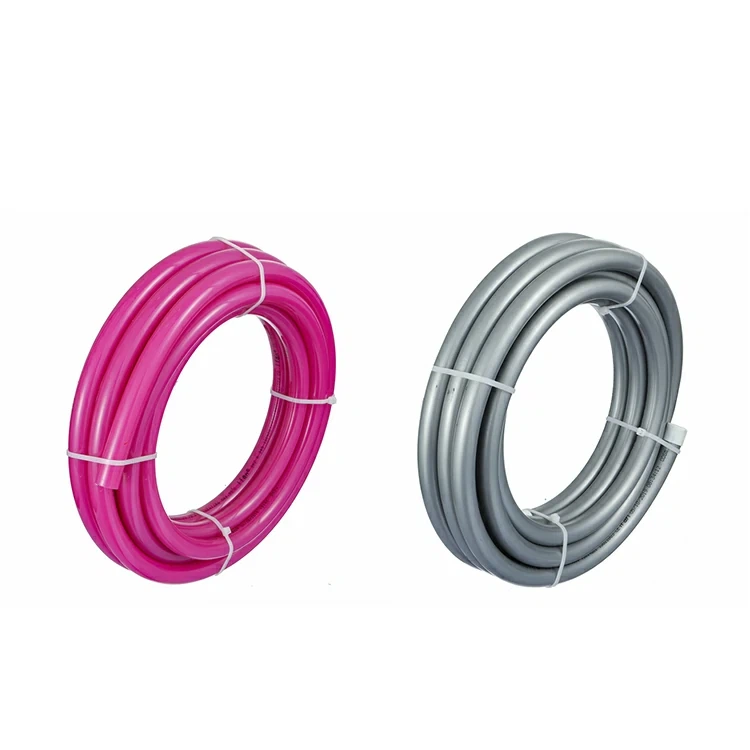


Long-Term High-Temperature Creep Performance Test Report of Underfloor Heating Pipes
Introduction: Importance of Creep Testing in Underfloor Heating Pipes
Underfloor heating systems often operate under elevated temperatures for prolonged periods.
The pipes used in these systems must maintain mechanical stability and dimensional integrity.
Creep testing measures how materials deform slowly over time under heat and pressure.
This report presents the results of a long-term high-temperature creep performance test.
The tested underfloor heating pipes were evaluated to determine their suitability for modern systems.
Objective of the Creep Test
The main objective was to evaluate how the underfloor heating pipes behave under stress and heat.
The test specifically focused on material deformation at sustained temperatures over time.
The goal was to ensure that pipes maintain function and safety throughout their service life.
The test also aimed to compare performance among several common pipe materials.
Results would inform both manufacturers and consumers about product reliability.
Materials and Pipe Specifications
Three types of underfloor heating pipes were selected for testing:
PEX-a (cross-linked polyethylene, type A)
PE-RT (polyethylene of raised temperature resistance)
PEX-b (cross-linked polyethylene, type B)
Each pipe had a nominal diameter of 16mm with a wall thickness of 2.0mm.
All samples were certified for heating use and sourced from leading manufacturers.
Material properties were documented prior to testing to ensure comparability.

Testing Methodology and Standards
The creep performance tests followed ISO 9080 and ISO 1167 guidelines.
Test conditions were set at a constant temperature of 95°C to simulate real use.
Internal pressure of 6 bar was applied continuously to all pipe samples.
Creep strain was measured periodically using precision extensometers and image tracking.
Data were logged digitally to capture minute dimensional changes over months.
The test continued for 1000 hours, equivalent to over a year of typical operation.
Samples were also visually inspected for cracks, blistering, or discoloration.
Results and Data Analysis
PEX-a showed minimal deformation, with less than 1.5% strain after 1000 hours.
Its molecular structure offered excellent resistance to both temperature and internal stress.
PE-RT also performed well, with creep strain just under 2.0% at the test endpoint.
PEX-b displayed slightly more deformation, registering about 2.5% strain after 1000 hours.
No visible cracks or structural failures were observed in any of the materials tested.
Graphs plotted from the test show a steep initial strain curve that later stabilized.
This indicates good long-term load-bearing behavior once thermal equilibrium is reached.
Discussion: Performance Under Long-Term Stress
The results confirm that PEX-a pipes have superior long-term high-temperature performance.
Its consistent behavior under pressure makes it ideal for high-demand applications.
PE-RT offers a strong balance between flexibility, cost, and thermal stability.
Though PEX-b showed slightly more creep, it remained within safe tolerance limits.
Pipe installation method, water quality, and system pressure also influence long-term durability.
These factors must be considered during system design and pipe selection.
The test reaffirms the necessity of choosing certified products for underfloor heating.

Implications for Industry and Installers
The findings support the use of high-grade PEX-a and PE-RT in demanding heating systems.
Manufacturers should emphasize creep resistance in marketing and technical documentation.
Installers must be trained to recognize materials best suited to specific project requirements.
Building codes may also integrate such performance data for future compliance checks.
Long-term reliability is especially critical in embedded heating systems, where maintenance is costly.
The ability of these pipes to resist creep ensures lower risk of deformation, leakage, or failure.
For end users, this translates to higher energy efficiency and system lifespan.
Conclusion: Summary of Findings
The long-term high-temperature creep test demonstrated excellent performance from all tested pipes.
PEX-a emerged as the most stable under prolonged stress, followed closely by PE-RT.
PEX-b also remained within acceptable deformation limits for underfloor heating use.
No structural damage or safety risks were observed during the test period.
These results provide valuable insights into pipe behavior in real-world heating systems.
Manufacturers and engineers can use this data to improve product development and system design.
Future testing could include longer durations and dynamic temperature cycling for even deeper analysis.
Recommendations and Future Work
It is recommended that further studies incorporate aging factors such as chemical exposure and UV light.
Hybrid multilayer pipes with aluminum or EVOH barriers may also be tested for creep performance.
New materials like bio-based PE or composite plastics should be benchmarked against PEX and PE-RT.
Testing under fluctuating pressure and temperature could better simulate actual service conditions.
Smart monitoring of strain and temperature in real installations may offer real-time performance data.
A larger data pool across international suppliers would improve global product standardization.
By advancing testing protocols, the industry ensures safety, quality, and user satisfaction.
Contact IFAN
Phone:+86 15088288323


