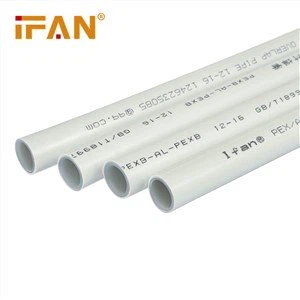


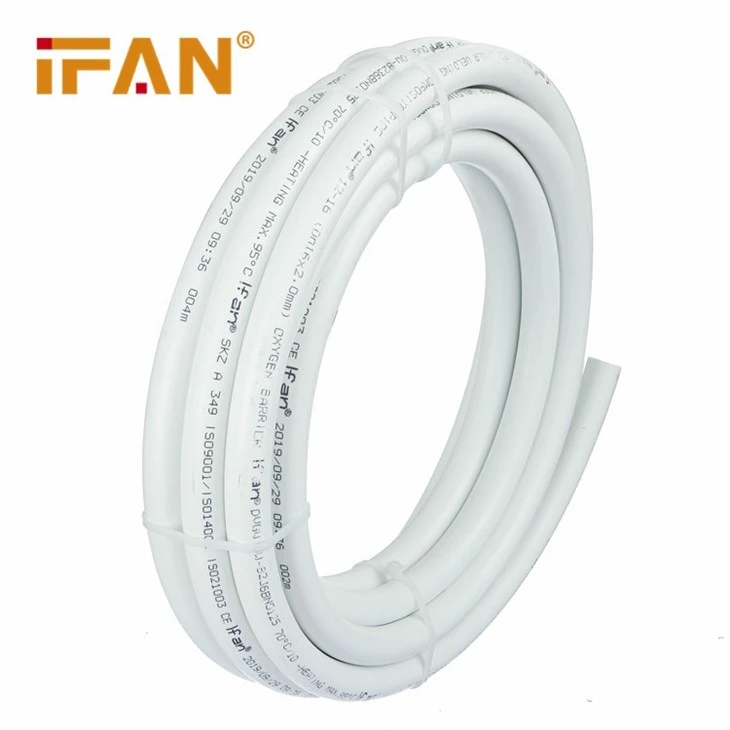
Description
Product Name | Aluminum PEX Tubing |
Material | PERT or PEX |
aluminum thickness | 0.19mm, 0.21mm and 0.23mm according the size |
Inside Material | PEX-A, PEX-B, PERT |
Working temperature | 95℃ |
Packing | by roll or color carton, 100m, 200m, 500m and so on |
Advantage of Aluminum PEX Tubing
1. Excellent mechanical properties: light weight, but has good pressure resistance, impact resistance, rupture resistance and strong plastic deformation ability
2.Excellent water conservancy performance The surface roughness of the inner wall of the aluminum-plastic composite pipe is small, the inner wall is very smooth, the friction resistance of the conveying fluid is small, and there will be no scaling phenomenon that affects the flow. The water flow is larger than that of the metal pipe, and due to its certain flexibility, It can effectively reduce the water hammer phenomenon, fluid pressure shock and noise in the water supply.
3. Excellent corrosion resistance. Due to the stable chemical properties of PE, the aluminum-plastic composite pipe can withstand the corrosion of various acids, alkali and salt solutions at room temperature.
4. Excellent temperature resistance and anti-aging performance
Other Products
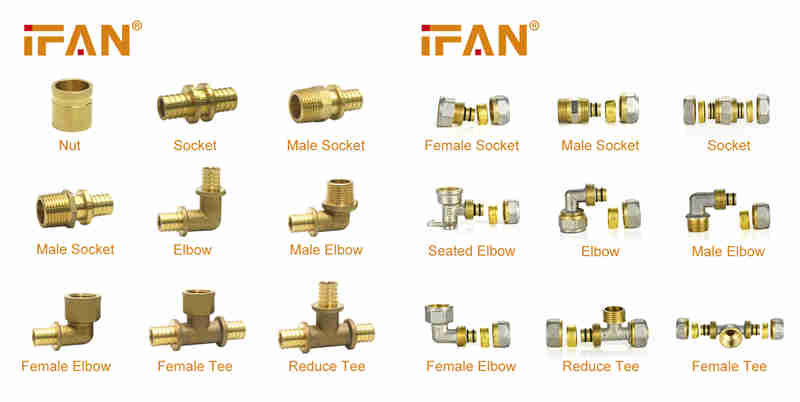
Issues that should be paid attention to during installation and construction
(1) Compared with metal pipes, PEX pipes have lower hardness and lower rigidity. They should be properly protected during handling, construction, and post pipe installation procedures to avoid improper construction and mechanical damage. In particular, the location of the pipeline should be marked after the concealed application, so as not to damage the pipeline during the second decoration.
(2) PEX pipes are brittle at low temperatures (below 5°C), so be especially careful during winter construction. When cutting pipes, use sharp knives to cut slowly. Do not place heavy pressure or knock on the installed pipeline, and cover the parts that are prone to external forces with protective materials when necessary.
(3) PEX pipes are prone to aging and degradation after long-term exposure to ultraviolet rays. When installed outdoors or in direct sunlight, they must be covered with a dark protective layer or painted with anti-ultraviolet paint.