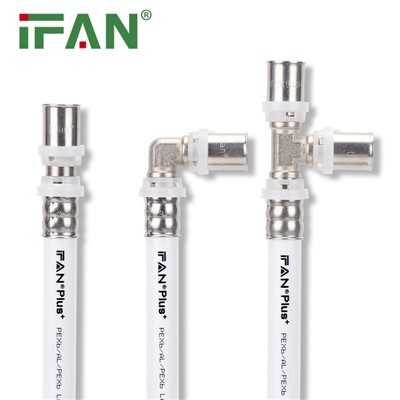


Testing and Acceptance Standards for PEX Press Fittings: A Comprehensive Guide
PEX (cross-linked polyethylene) press fittings are widely used in plumbing systems due to their reliability, ease of installation, and durability. However, to ensure that these fittings perform optimally and meet safety requirements, it is essential to follow strict testing and acceptance standards. These standards not only guarantee the quality and performance of the fittings but also ensure the safety and longevity of the entire plumbing system. This article will explore the key testing and acceptance criteria for PEX press fittings, with a particular focus on IFAN PEX press fittings and PEX press fittings, highlighting the advantages of IFAN's products in meeting and exceeding these standards.
1. Physical and Mechanical Testing Requirements
Before PEX press fittings are approved for use, they must undergo a series of physical and mechanical tests to ensure that they can withstand the pressures, temperatures, and stresses encountered in typical plumbing systems. These tests typically include pressure testing, burst testing, and tensile strength testing.
For PEX press fittings to pass inspection, they must show no signs of failure or deformation under pressure. These tests simulate the conditions that the fittings will experience in real-world applications. IFAN PEX press fittings are manufactured to meet or exceed the industry's stringent mechanical performance standards. The high-quality materials used in IFAN fittings, such as brass and stainless steel, provide superior resistance to high pressure and temperature, ensuring that the fittings maintain their integrity over time. PEX press fittings, while still durable, often do not perform as consistently under extreme pressure or temperature variations as IFAN, which uses a more advanced manufacturing process to ensure greater reliability and durability.

2. Leakage Resistance Testing
Leakage resistance is a critical factor in determining the quality and performance of PEX press fittings. These fittings must be able to provide a secure, leak-free connection to ensure the integrity of the plumbing system. Testing for leakage involves subjecting the installed fitting to water or air pressure at specific levels for extended periods to ensure no leaks occur.
IFAN PEX press fittings undergo rigorous leak testing, with an emphasis on preventing even the smallest amount of leakage under varying pressure conditions. The high precision of IFAN's press fittings ensures that they provide a perfect seal every time, minimizing the risk of leaks that could lead to costly water damage. The press tool used with IFAN fittings guarantees consistent, secure connections that are resistant to both internal and external pressures. In contrast, while PEX press fittings also undergo leakage tests, the sealing mechanism in IFAN's products is generally more advanced, ensuring fewer failures and better long-term performance.
3. Compatibility and Material Testing
Another key aspect of PEX press fitting acceptance is the compatibility of the fitting with various types of piping materials, such as PEX, copper, CPVC, and even steel. Fittings must be compatible with these materials to create a secure and effective connection. Compatibility testing ensures that the material used for the fitting does not react adversely with the pipe material and that the connection remains stable under normal usage conditions.
IFAN PEX press fittings excel in material compatibility, providing a wide range of fittings designed to work seamlessly with various pipe materials. Their advanced design allows for effortless transitions between PEX and other pipe materials, ensuring the integrity of the plumbing system. This level of compatibility makes IFAN's PEX press fittings a versatile choice for both residential and commercial projects. On the other hand, PEX press fittings may have some limitations when it comes to compatibility with certain pipe materials, and in some cases, additional adapters may be required, which can increase installation time and costs.
4. Corrosion and Chemical Resistance Testing
Corrosion resistance is vital for ensuring the longevity of PEX press fittings, especially in environments where the fittings are exposed to chemicals, water, or extreme temperatures. Chemical resistance testing is designed to evaluate how the fitting holds up when exposed to various chemicals, including those found in drinking water, sewage, and other industrial applications.
IFAN PEX press fittings are designed with advanced corrosion-resistant materials, such as high-grade brass and stainless steel, which are known for their ability to withstand corrosive environments. The fittings undergo rigorous testing to ensure they can resist the damaging effects of water and chemicals over extended periods, maintaining their structural integrity and performance. PEX press fittings, while also made from corrosion-resistant materials, tend to have a slightly lower grade of material, which may affect their performance in highly corrosive environments. This makes IFAN a better choice for areas where fittings are exposed to harsh chemicals or fluctuating temperatures, ensuring a longer lifespan and fewer maintenance needs.

5. Quality Control and Compliance with Industry Standards
PEX press fittings are required to meet various industry standards, such as ASTM F1807, ASME A112.18.1, and others, which ensure that the fittings meet rigorous safety and performance criteria. These standards are set by international organizations to ensure that PEX fittings perform reliably under typical plumbing conditions.
IFAN PEX press fittings adhere to the highest quality control standards and comply with all relevant industry certifications, including NSF/ANSI and UL certifications. This means that IFAN's products are subject to continuous testing throughout the manufacturing process to ensure they meet or exceed all performance requirements. Additionally, IFAN has a reputation for excellent customer support and product traceability, providing assurance to contractors and homeowners that their products meet the highest standards of quality. PEX press fittings, while meeting basic industry standards, may not always demonstrate the same level of quality assurance or consistency as IFAN's products, which can lead to occasional variations in performance or reliability. IFAN PEX Press Fittings are not only compliant with the ASTM F1281 series standards but also adhere to a broad range of international standards, including ASTM F1974, DIN 16836, GB18997, and ISO 21003. This extensive compatibility ensures that IFAN products meet the highest quality and performance requirements across various global markets, providing reliable solutions for diverse plumbing and piping applications.
Conclusion: Why IFAN PEX Press Fittings Lead the Way
In conclusion, PEX press fittings are an essential component of modern plumbing systems, and ensuring that these fittings meet strict testing and acceptance standards is crucial for maintaining system integrity, safety, and longevity. Through rigorous testing, including mechanical performance, leakage resistance, material compatibility, corrosion resistance, and quality control, IFAN PEX press fittings consistently outperform their competitors, such as PEX press fittings.
IFAN's commitment to high-quality materials, precision engineering, and rigorous testing ensures that its PEX press fittings provide superior performance and durability. Whether it's the ease of installation, the reliability of the connection, or the long-term resistance to pressure and chemical exposure, IFAN stands out as the more reliable choice.
Contact IFAN
Phone:+86 15088288323