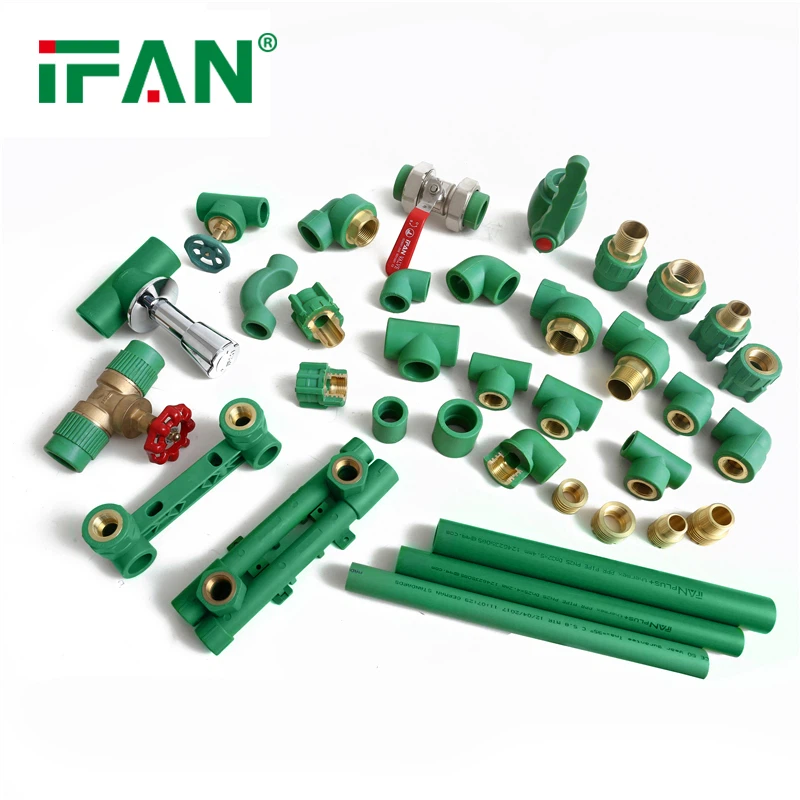
The problem of water leakage in water pipes is rarely due to the quality of the pipes themselves, and most of them are welding problems. Here is a summary of some factors that affect the quality of water pipe welding.
1. Heating temperature and time
The soldering temperature should be controlled at 260-270℃. When the temperature is too low, the heat fusion of the PPR pipe is not in place, and the pipe and fittings cannot be well welded. When the temperature is too high, it is easy to cause blockage or affect the flow at the joint of the pipe. And PPR will become thin and soft and remain on the die, and carbonization will occur under long-term high temperature, which will affect the service life of the die.
2. Welding depth
The welding depth is related to the outer diameter of the PPR pipe. For a pipe with an outer diameter of 20mm, the minimum welding depth is 14mm, and for a pipe with an outer diameter of 25mm, the minimum welding depth is 15mm. When the welding depth is too shallow, the welding area is not enough, and the water pipe is not firmly bonded. When the welding depth is too deep, the excess part will be squeezed inside the pipe fittings, reducing the inner diameter of the water pipe at the squeezed part, resulting in a reduction in the water flow of the water pipe, and even lead to welding blockage.
3. Whether the water pipe port is cracked
Due to the low temperature brittleness of PPR, especially in winter, the construction site environment is often complicated. If no attention is paid to protection, the PPR pipe will inevitably be damaged. Before welding water pipes, it is necessary for plumbers to check whether the pipes have been damaged, and avoid using water pipes with cracked ports to weld with fittings, resulting in water leakage. In addition, pay attention to the cleaning of the welded part of the pipe, so as not to cause the welding to be weak.
In general, water pipe welding needs to pay attention to:
1. Choose a good water pipe that is easier to weld.
2. Select welding equipment with accurate temperature control to ensure that the temperature is controlled at 260-270°C.
3. Make sure the welding die head is clean, which needs to be cleaned and replaced regularly.
4. Master the welding depth and avoid too shallow or too deep sockets.
5. Master the welding time, avoid too long and too short.
6. Before welding, pay attention to check whether the water pipe has been damaged, and clean the parts to be welded.