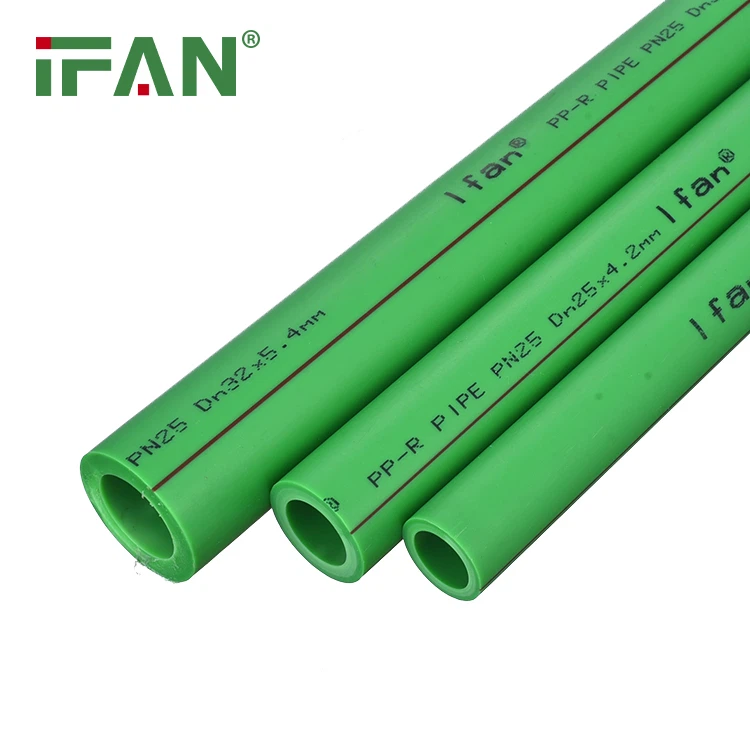
Pipes used to make hot water pipes must have good high temperature resistance, and pipes made of new material PPR (polypropylene random copolymer) have good high temperature resistance to meet the above requirements. Today, IFAN will introduce to you the high temperature resistance performance of PPR heat pipe.
PPR is the abbreviation of polypropylene, also called random copolymer polypropylene pipe. It adopts heat welding method, has special welding and cutting tools, and has high plasticity. The price is also very affordable. After adding the insulation layer, the insulation performance is better, and the pipe wall is smooth, excluding the joints of inner and outer wires. It is generally used for pre-buried walls or pre-buried pipes of deep wells. PPR pipe has the advantages of moderate price, stable performance, heat resistance, heat preservation, corrosion resistance, smooth inner wall, no scaling, safe and reliable piping system, impermeable, and a service life of up to long-term durability according to standards. If used for domestic hot water, the long-term temperature resistance of the PPR pipe is 70°C. It can withstand the temperature of 90 degrees for a short time. If used for heating, the maximum working temperature of PPR pipe is 80℃. The highest temperature that can be tolerated for a short time is 90 degrees.
Usually should pay attention to:
1. PPR heat pipe can replace cold pipe, but PPR cold pipe cannot replace heat pipe.
2. PPR pipes will become brittle if the room temperature is around 10°C. In addition, the temperature of the water in the PPR pipe must not be lower than 0°C, otherwise the water will freeze and explode.
3. Pay attention to distinguish between hot and cold water pipes when purchasing.
PPR pipes are divided into hot water pipes and cold water pipes. It can be seen from the name that the high temperature resistance of the two is different, so you must pay attention to the difference when purchasing.