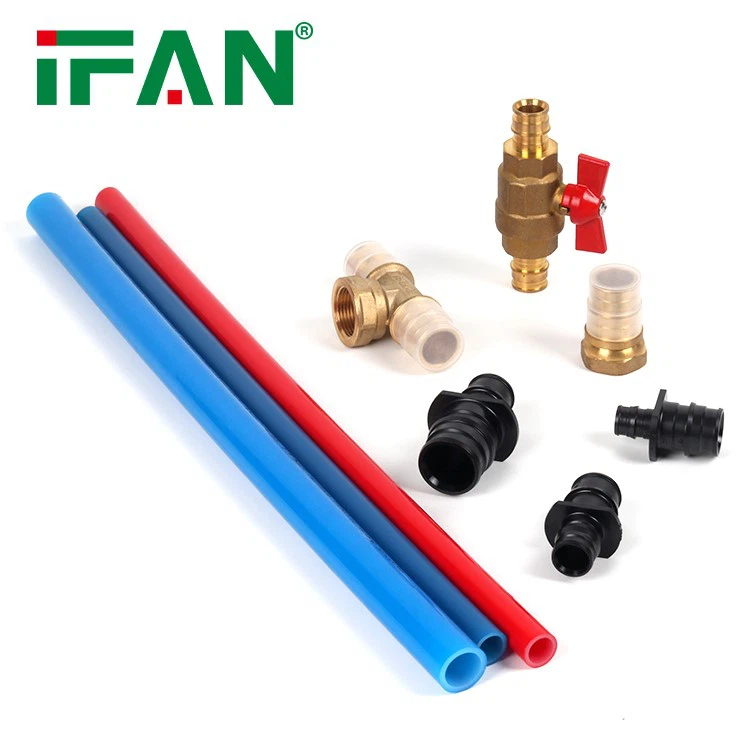
When deciding between brass and plastic PEX fittings, both options have their pros and cons, depending on the application and environmental factors.
Products Standard:ISO15875,GB-T 18992,DIN 16892,ASTM F877,ASTM F2788,BS 7291,BS EN ISO 15875,CSA B137
1. Brass PEX Fittings
Durability: Brass is a strong, long-lasting material. It's highly resistant to mechanical damage, making it a good option for high-pressure and high-temperature systems.
Versatility: Brass fittings can be used with different PEX types (PEX-A, B, and C).
Corrosion: Brass is vulnerable to corrosion in areas with high levels of water acidity or alkalinity, which can reduce its lifespan.
Cost: Generally more expensive than plastic fittings, but the durability can justify the price in certain situations.
2. Plastic PEX Fittings
Corrosion Resistance: Plastic fittings (typically made from polysulfone or PPSU) are not prone to corrosion, making them ideal for areas with aggressive water conditions.
Lower Cost: Plastic fittings are usually cheaper than brass.
Flexibility: They are more flexible than brass and may absorb vibrations and thermal expansion better.
Strength: While durable, plastic fittings are not as strong as brass and may not be ideal for high-stress or high-temperature systems.
Conclusion
Use brass fittings in high-temperature or high-pressure systems, or where mechanical durability is essential.
Use plastic fittings in areas with corrosive water or when you want to save costs without sacrificing long-term reliability in normal pressure conditions.
Contact IFAN
Phone:+86 15088288323 Email:sales24-ifan@ifangroup.com