
Introduction: The Role of EVOH in Underfloor Heating Pipes
Underfloor heating systems require durable and efficient piping to ensure long-term performance.
One key innovation is the integration of EVOH (Ethylene Vinyl Alcohol) oxygen barrier layers.
EVOH prevents oxygen permeation, protecting metal parts from corrosion and system degradation.
Traditionally, challenges in EVOH processing have limited its application and raised costs.
Recent advancements in manufacturing techniques have changed this landscape.
This article explores the breakthroughs in EVOH barrier layer production for heating pipes.
Why Oxygen Barriers Are Essential
Underfloor heating systems often contain metallic components like pumps, valves, and manifolds.
Oxygen ingress leads to rust, sludge formation, and reduced thermal efficiency.
Without an effective barrier, oxygen from surrounding air diffuses into the water system.
This results in maintenance issues and system failure over time.
The EVOH layer acts as a shield, drastically reducing oxygen permeability.
Compared to other barrier materials, EVOH offers superior performance and longevity.
Its use ensures a closed, oxygen-tight system suitable for long-term heating applications.
Traditional Manufacturing Challenges
Despite its benefits, producing EVOH-coated pipes has traditionally posed technical difficulties.
EVOH is sensitive to moisture and temperature, complicating the extrusion process.
Co-extrusion with polyethylene or PEX often results in weak bonding or delamination.
Maintaining uniform thickness and adhesion has been a critical challenge.
Any inconsistency can lead to barrier failure and customer dissatisfaction.
Moreover, EVOH is more expensive than standard polymer materials, increasing production cost.
These challenges limited the widespread adoption of EVOH layers in budget-sensitive markets.
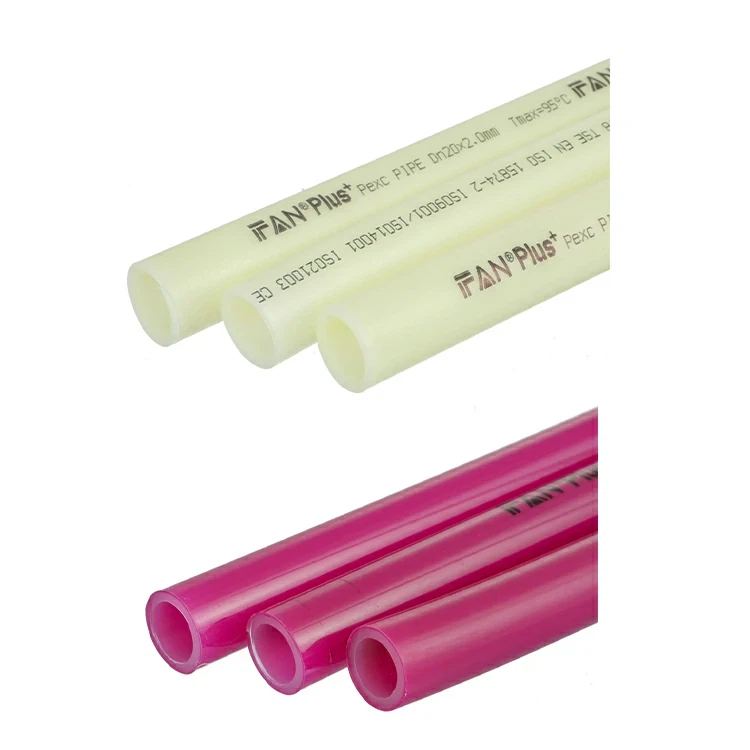
New Co-Extrusion Technology
A major breakthrough in EVOH integration is the adoption of advanced multi-layer co-extrusion lines.
Modern machines allow five-layer or three-layer pipe extrusion in a single process.
The core PEX or PE-RT pipe is combined with adhesive layers and a precise EVOH coating.
Computer-controlled die heads ensure accurate layer thickness and bonding.
Enhanced vacuum calibration maintains pipe roundness and surface quality.
This technology minimizes waste, reduces labor, and improves consistency.
As a result, manufacturers can produce high-quality EVOH barrier pipes more efficiently than before.
Material Compatibility and Adhesive Innovations
Another critical improvement involves the development of better adhesive resins.
These materials improve the bond between EVOH and the inner pipe layers.
The adhesives must tolerate high processing temperatures without degrading.
They also ensure the EVOH layer remains stable during bending or coiling.
Modern tie layers, often based on modified polyolefins, solve delamination issues.
Compatibility between EVOH and the pipe's base material is now engineered at the molecular level.
This innovation leads to stronger, longer-lasting pipe structures with reliable oxygen barriers.
Process Control and Quality Assurance
New sensor-based monitoring systems are integrated into the production line.
These tools measure layer thickness, temperature, and extrusion speed in real time.
Any deviation is corrected automatically to prevent defects and material waste.
Non-destructive testing (NDT) methods like ultrasonic scanning ensure product integrity.
Finished pipes are also tested for oxygen permeability using ISO 17455 standards.
Manufacturers now maintain tight control over every stage of production.
This results in consistent quality and better market confidence in EVOH-coated pipes.

Performance Benefits of the Upgraded EVOH Barrier Pipes
Modern EVOH-layered pipes offer numerous advantages over older generation products.
They have an oxygen transmission rate (OTR) as low as 0.1 mg/l/day.
This meets the strictest international standards for underfloor heating systems.
Pipes retain flexibility and thermal stability even after years of use.
The improved barrier extends the life of the heating system by preventing corrosion.
Their lightweight nature and coiled delivery format make them easy to transport and install.
This new generation is suitable for residential, commercial, and industrial applications.
Sustainability and Cost Efficiency
The new EVOH production method reduces material waste and energy consumption.
Faster extrusion speeds mean higher throughput and lower labor cost per unit.
Improved adhesive and co-extrusion eliminate the need for additional processing steps.
This results in lower overall production costs without compromising quality.
Environmentally friendly production is also achieved through better resource utilization.
Many manufacturers are now adopting recyclable EVOH blends for greener construction.
These improvements make high-performance oxygen barrier pipes accessible to wider markets.
Conclusion: Industry Impact and Future Outlook
The breakthrough in EVOH oxygen barrier layer production marks a new era for heating pipes.
Enhanced manufacturing processes, better material integration, and quality control drive growth.
These advancements improve pipe reliability, reduce failures, and support sustainable building trends.
The success of this innovation highlights the importance of continuous R&D in pipe technology.
As demand for energy-efficient heating rises, EVOH-coated pipes will become a market standard.
Future improvements may involve smart materials or nanotechnology for even greater performance.
For now, the new generation of EVOH heating pipes offers a compelling mix of durability, safety, and efficiency.
Contact IFAN
Phone:+86 15088288323