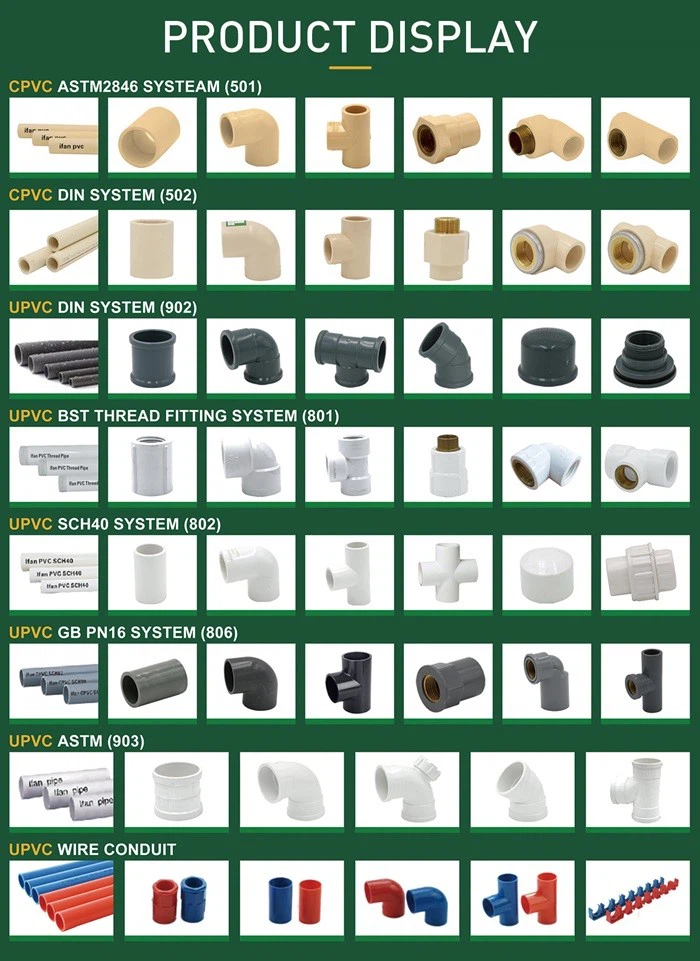
CPVC (Chlorinated Polyvinyl Chloride) pipes are a popular choice for plumbing systems due to their durability, chemical resistance, and ease of installation. Understanding the standard sizes of CPVC pipes is essential for proper plumbing design and installation. Here's a comprehensive overview:
1. Nominal Size: CPVC pipes are designated with nominal sizes, which are not the actual measurements but rather the name by which the pipe is referred to. The nominal size is based on the approximate inside diameter (ID) of the pipe. Common nominal sizes for CPVC pipes range from 1/2 inch to 2 inches.
2. Actual Size: The actual size of a CPVC pipe refers to its true dimensions, including the outer diameter (OD) and wall thickness. For example, a 1/2-inch nominal size CPVC pipe typically has an actual outer diameter of around 0.840 inches, while a 2-inch nominal size CPVC pipe may have an actual outer diameter of approximately 2.375 inches.
3. Standard Schedule: CPVC pipes are available in different schedules, which indicate the wall thickness of the pipe. The most common schedules for CPVC pipes are Schedule 40 and Schedule 80. Schedule 40 CPVC pipes have a thinner wall thickness and are suitable for most residential and commercial plumbing applications, while Schedule 80 CPVC pipes have a thicker wall and are used in applications requiring higher pressure resistance.
4. Common Applications: CPVC pipes of various sizes are used in a wide range of applications, including hot and cold water distribution, industrial processing, chemical transport, and fire sprinkler systems. The size of the CPVC pipe required for a specific application depends on factors such as the flow rate, pressure rating, and building codes.
5. Compatibility: When selecting CPVC pipe sizes, it's essential to ensure compatibility with fittings and other components of the plumbing system. CPVC fittings are typically designed to fit specific nominal sizes of CPVC pipes, ensuring a secure and leak-free connection.
6. Standards and Regulations: CPVC pipes are manufactured and tested according to industry standards such as ASTM (American Society for Testing and Materials) and NSF (National Sanitation Foundation) International standards. These standards ensure the quality, performance, and safety of CPVC pipes for use in plumbing systems.
In conclusion, understanding the standard sizes of CPVC pipes is vital for successful plumbing design and installation. By considering factors such as nominal size, actual dimensions, schedule, applications, compatibility, and standards, you can choose the right CPVC pipe size for your specific needs with confidence.